8 Document Cameras & OCR Scanners Recommended for Berlin Wholesale Buyers
Use this shortlist as a qualification starting point, not as a blind catalogue. Each model below is matched to a recurring Berlin buying intent, from A2 technical drawing capture and counter-side KYC to hybrid teaching and mobile casework. Product URLs are preserved as supplied; verify final configurations, software language packs and EU documentation before a tender submission.
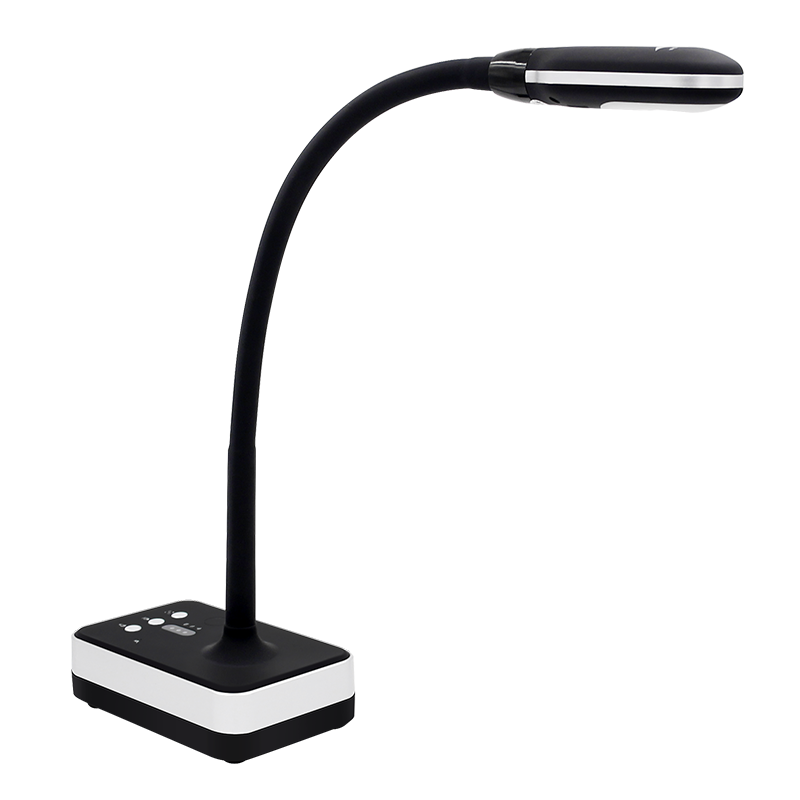
ELOAM VW1000A3AF High Speed Portable A3 Intelligent Archive Automatic Document Camera Scanner USB Interface in Stock
A3 overhead capture with automatic archiving logic. Best for Berlin public records, legal files, building plans and scan-on-demand services where paper must move quickly and non-destructively. Ask for a sample if your bid requires one-second capture, auto-crop and USB deployment.
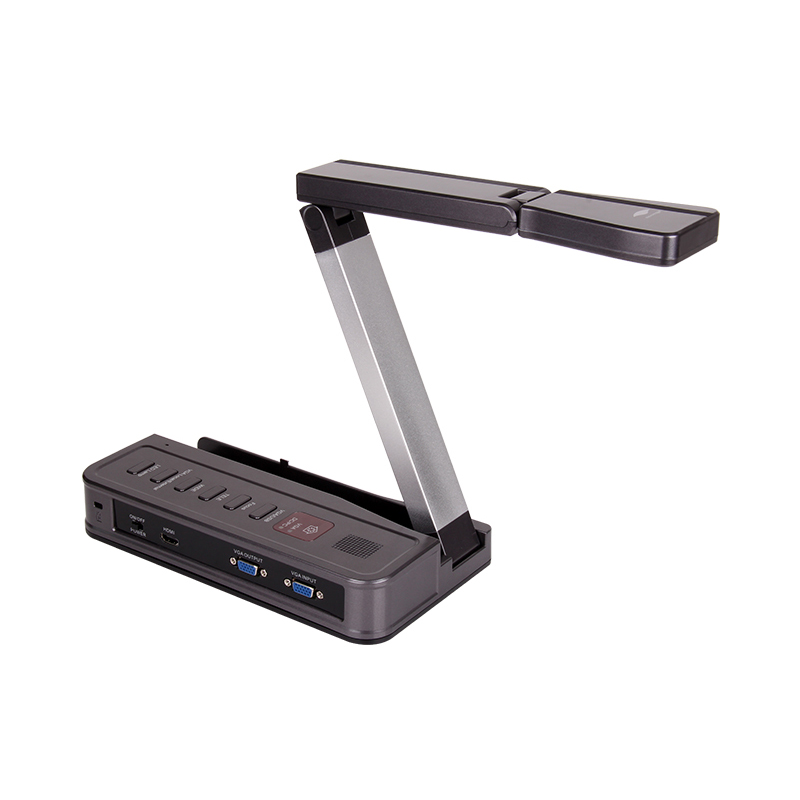
Eloam Portable A4 5MP 30FPS USB Type-C 3-in-1 Interactive Document Camera Projector Visualizer
A4 5MP 30FPS USB-C 3-in-1 visualizer. Suitable for Berlin schools, coworking rooms and training providers that need a teacher-friendly camera, webcam and document projector in one device. USB-C supports modern laptop fleets; confirm software and microphone requirements for hybrid lessons.
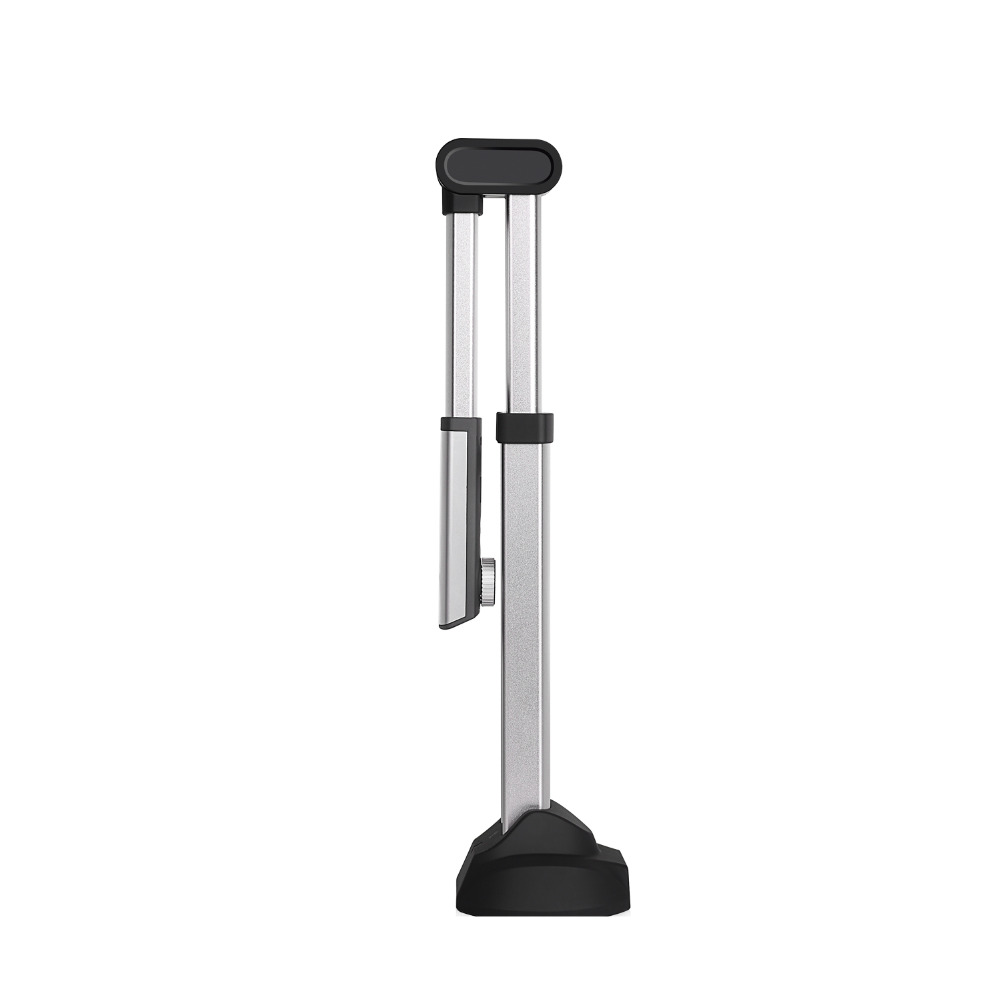
Eloam S1800A2 16MP USB 2.0 Document Camera A2 A3 Scanner 3264 x 2448 CMOS 180 Language OCR Natural Light LED
A2/A3 16MP scanner with 180-language OCR and natural-light LED. Useful for architecture, engineering, universities and archives handling maps, large drawings and mixed documents. The 3264 x 2448 CMOS sensor gives margin for cropping and OCR; check the A2 workflow and file output in a sample test.
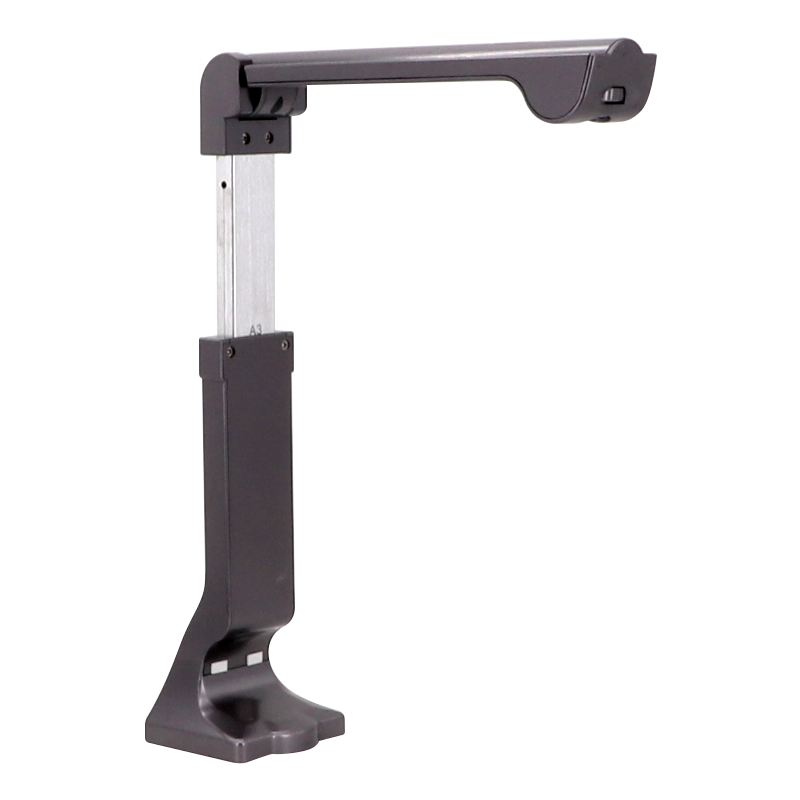
ELOAM S600 10MP CMOS A3 Folding Document Scanner with USB Interface and OCR Camera Gray 1-Year Warranty in Stock 1-Second
A3 10MP folding scanner with OCR and USB. A practical desk-side unit for Berlin offices and mobile auditors; the folding form helps shared desks and hot-desking. The 1-second scanning claim should be verified against your real document mix, lighting and software settings.
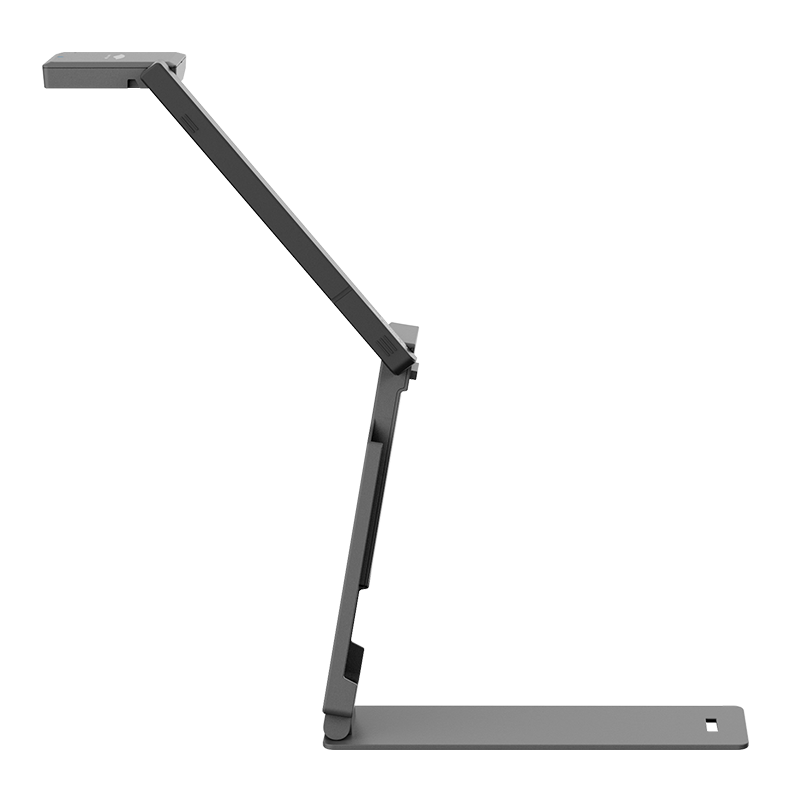
ELOAM VE1300A3AF 4K Document Camera 3-in-1 Scanner USB for Education Stock
4K document camera and 3-in-1 scanner for education. Best where Berlin classrooms use large displays, STEM demonstrations and blended learning. 4K is not automatically better: confirm 30 FPS, focus stability, light handling and software. Strong candidate for universities, teacher training and auditoriums.
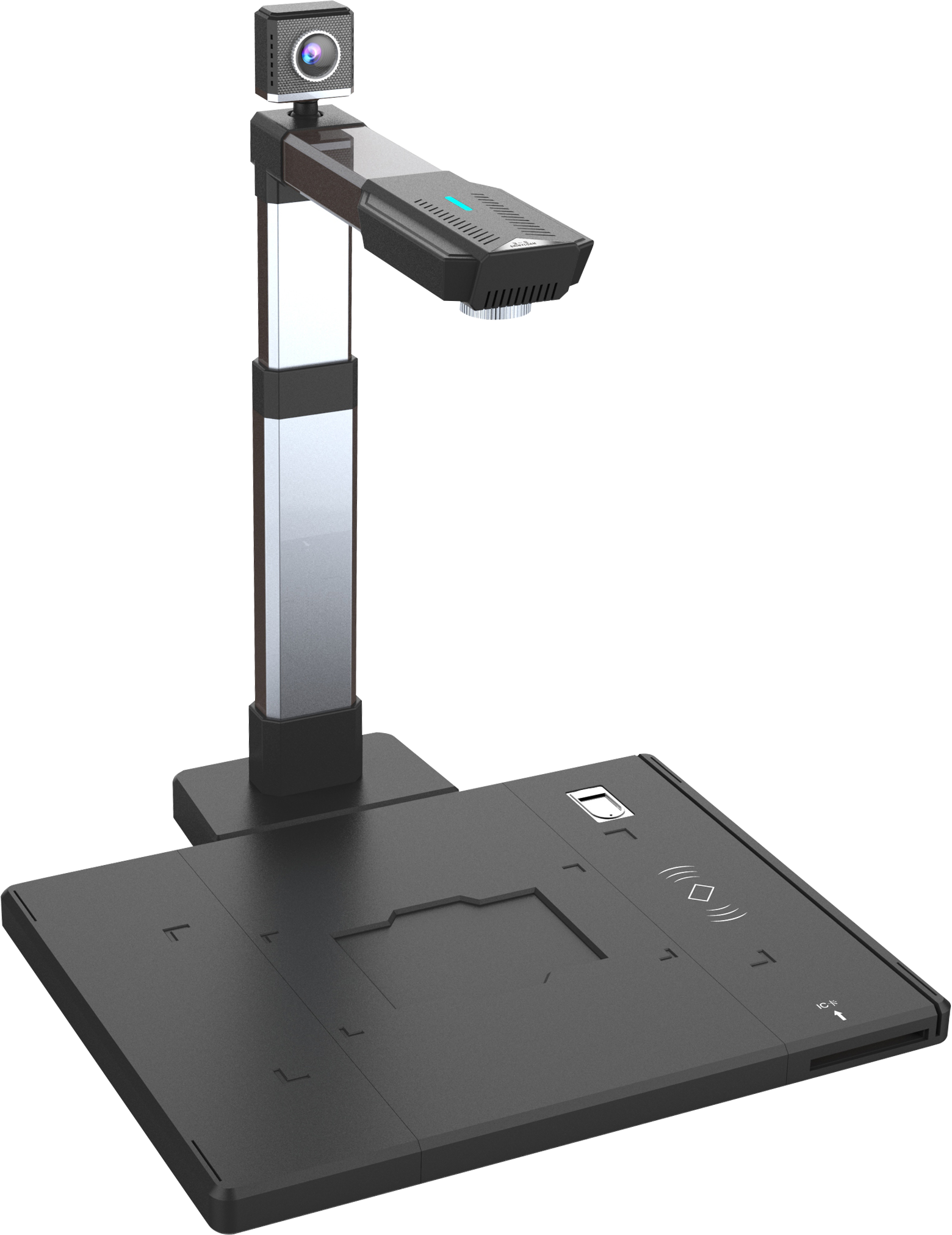
Eloam YL1020 Dual Lens USB Interface High-Speed A3 OCR 2D Code SDK Supported Multifunctional Library Document Scanner Save Time
Dual-lens A3 scanner with OCR, 2D code support and SDK. This is the model to discuss when Berlin libraries, logistics teams or integrators need barcode/QR workflows, ID capture or software integration. SDK availability makes it relevant for DMS and KYC projects; validate API scope with our engineers.

ELOAM S1000C A4 Portable USB Document Camera Scanner 10MP Multi-Language OCR Office Scanning Android Windows Stock Fast 1S Scan
Portable A4 10MP USB document camera with multi-language OCR for Windows and Android. Fits mobile caseworkers, field sales, property inspectors and pop-up service points. A4 portability and 1-second scan speed reduce training overhead; confirm Android app and OCR language packs before rollout.
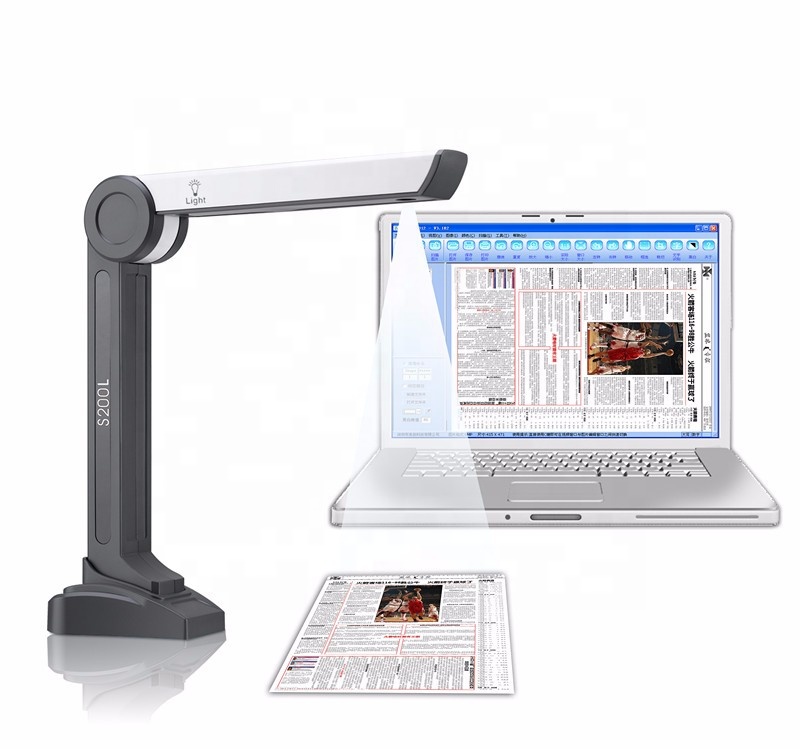
Eloam USB 2.0 Interface Mini Portable Document Scanner Visualizer A4 Size CMOS Sensor 1 Second Scan Speed 1600x1200 Resolution
Mini portable A4 USB 2.0 scanner with 1-second scan and 1600x1200 output. A cost-controlled option for Berlin resellers who need volume deployment, backup units or entry-level visualizers. It is not a substitute for 4K or A2 models; specify the use case to avoid return risk.
What Berlin Buyers Really Mean by “Document Camera Exporter and Wholesaler”
A semantic search for this phrase rarely stops at a product image. It usually combines supplier qualification, local use-case fit, EU documentation and a reliable sample-to-order path.
When a Berlin reseller, school IT coordinator or public-procurement officer searches for digital document camera exporters & wholesaler in the Berlin market, the query is rarely just about buying a camera. It usually combines four buying intents: manufacturer legitimacy, model fit for a specific room or workflow, EU documentation and warranty, and a reliable path from sample to repeat order. A useful supplier page must therefore explain not only megapixels, but also which model suits a seminar room, a citizen-service counter, a library reading room or a mobile caseworker.
Terminology matters. In Berlin, a Dokumentenkamera is often a classroom visualizer used for live demonstration, while a Dokumentenscanner may mean an overhead scanner for OCR and PDF creation. Libraries may ask for a Buchscanner; AV teams may say “visualizer”; bank and legal buyers may describe the same hardware as a KYC or contract-capture device. The same physical product can serve different intents, but the acceptance criteria change: frame rate and focus speed dominate live teaching, whereas OCR language coverage, auto-crop, file formats and SDK integration dominate back-office scanning.
For Berlin, this distinction is especially practical because procurement is often shared between a reseller, an IT department, a data-protection officer and a budget holder. A school may need 30 FPS live video and simple teacher software; a public authority may require local data processing and CE documentation; an integrator may need an SDK for a document-management system. The eight models above are mapped to these local buying patterns, with the original product URLs preserved for direct evaluation.
Factory and wholesaler checks
Verify manufacturing site, production lines, OEM/ODM capability, sample policy and whether the quoted supplier is a manufacturer or a trading intermediary.
Classroom visualizer fit
Check live video fluidity, focus, lighting, arm reach, USB-C/USB output and teacher software; 4K without stable 30 FPS can disappoint.
Public-sector documentation
Ask for CE, ISO 9001, test reports, warranty terms, packaging and product-lifecycle data before Berlin tender submission.
Workflow integration
Confirm OCR languages, PDF/JPEG/TIFF output, 2D-code reading, SDK scope, Windows/Android/macOS support and DMS compatibility.
Berlin Application Scenarios for Digital Document Cameras & OCR Scanners
Berlin’s document capture demand is concentrated in spaces where paper, people and digital records meet. The right device depends on the room, the document and the person operating it.
Schools and vocational training
Hybrid classrooms, science demonstrations, handwriting exercises and exam reviews need a visualizer that switches on quickly, focuses on a worksheet without hunting for buttons and outputs clean live video to the room display. For shared rooms, folding A3 scanners and portable A4 cameras reduce setup friction. In Berlin tenders, specify whether teachers need USB-C, 30 FPS, microphone support and German on-screen software.
Universities, research and STEM labs
Large-format drawings, lab notebooks, specimens and circuit boards require detail and colour stability. The S1800A2 is relevant for A2/A3 technical material and 180-language OCR; the 4K VE1300A3AF is better for live lecture display. Confirm software compatibility with research and teaching PCs, and test high-detail capture under real room lighting rather than in a controlled demo room.
Public administration and citizen services
Bezirksämter, service counters and citizen offices capture forms, ID evidence and supporting documents. Speed matters, but DSGVO/GDPR review matters more. Ask whether OCR runs locally on the PC, what data leaves the device, and how files are named and retained. A portable A4 model can support mobile service points; an A3 model can handle plans, forms and multi-page records.
Banking, insurance and legal
KYC packets, passports, signatures, contracts and property files often need fast, legible capture with consistent output. Dual-lens and auto-crop functions reduce retakes, while SDK support helps integrate capture into case-management systems. Berlin buyers should request sample scans under office lighting and confirm resolution, file format and audit-friendly naming before a branch rollout.
Libraries, archives and museums
Fragile paper, bound volumes, maps, photographs and collection records require non-contact capture. Overhead document cameras reduce handling stress; if a tender explicitly requires a V-shaped cradle or laser-assisted flattening, ask about the manufacturer’s dedicated book-scanner series rather than forcing a standard visualizer. Test OCR on the actual typeface and language, not only modern print.
Creative, coworking and field teams
Design reviews, sketches, moodboards, prototypes and mobile paperwork are part of Berlin’s creative and service economy. Portable A4 scanners and USB-C visualizers support hot-desking, client visits and pop-up workshops. Buyers should compare weight, cable requirements and software simplicity, because a powerful device that stays in the cupboard delivers no return.
Berlin Trends Shaping Document Camera Procurement
Berlin demand is moving toward hybrid-ready classrooms, data-protection-aware buying, multilingual OCR and space-efficient hardware that serves more than one workflow.
Hybrid-first classrooms and meeting rooms
Berlin schools, universities and training providers continue to equip rooms for mixed attendance. The practical requirement is not simply 4K; it is stable 30 FPS video, fast focus, clean USB-C/USB connectivity and software that a non-specialist teacher can open in seconds. Suppliers that can demonstrate a complete room workflow, including mounting and training, gain an advantage over box-only sellers.
Compliance-led and data-protection-aware buying
Public-sector and regulated buyers ask earlier about CE marking, ISO 9001, warranty, test reports, software architecture and data flows. DSGVO/GDPR questions are common when OCR or cloud services are involved. A credible exporter should separate what is standard, what is optional and what must be confirmed per model. Overclaiming EU compliance is a fast way to lose trust.
Multi-language OCR and document diversity
Berlin’s population and business base are international. Buyers may need German, English, Turkish, Polish, Arabic, Ukrainian or other language recognition. Selected models support OCR in up to 180 languages, but the exact language pack, output format and operating-system path must be checked. The practical test is a sample set of real documents, not a marketing language list.
Space efficiency and device consolidation
High rents and shared facilities push buyers toward folding A3 scanners, portable A4 units and 3-in-1 visualizers that combine camera, scanner and webcam functions. Consolidation lowers desk footprint and training load, but it should not compromise the primary task. Match the device to the dominant workflow and keep a second model for exceptions such as A2 drawings or bound books.
How to Shortlist the Right Model for a Berlin Wholesale Order
Use the buyer type to narrow the field, then test the exact workflow with a sample before committing to a rollout. This is more reliable than comparing headline megapixels across catalogues.
K-12 schools and training rooms
Start with the VE1300A3AF 4K education model, the Eloam A4 5MP 30FPS USB-C visualizer and the VW1000A3AF for shared resource areas. Ask for 30 FPS performance, easy focus, teacher software, warranty terms and accessory standardisation across sites.
Universities, labs and maker spaces
Compare the S1800A2 for A2/A3 technical material, the YL1020 for dual-lens, 2D-code and SDK workflows, and the VE1300A3AF for 4K lecture display. Ask for SDK scope, OS support, lighting performance, colour fidelity and mounting options.
Public administration, banks and legal
Shortlist the S1000C portable A4, S600 A3 folding scanner and VW1000A3AF for archive capture. Ask for OCR languages, PDF output, local processing pathways, DSGVO review support, file naming options and sample scans under office lighting.
Libraries, archives and integrators
Investigate the YL1020 for dual-lens, 2D-code and SDK integration, and the S1800A2 for A2/A3 material. If bound-book handling is a tender requirement, ask about the book-scanner series. Request non-contact capture samples, a spare-parts plan and clear software licence terms.
- Live frame rate and focus: 30 FPS with stable autofocus is usually more important than a higher still-image count for teaching and presentations.
- Optical vs digital zoom: optical zoom preserves detail; digital zoom enlarges pixels. Check which technology is used for the claimed magnification.
- Scan area and page handling: A4 for forms, A3 for contracts and drawings, A2 for maps; bound books may need a dedicated cradle or book-scanner design.
- OCR and software: confirm language packs, output formats, OS support and whether data stays local to support your Berlin data-protection review.
- Integration: verify SDK/API documentation, 2D-code reading and compatibility with DMS, KYC or LMS platforms before promising a custom workflow.
- Commercial durability: check warranty, spare parts, packaging, EU documentation and whether accessories are standardised for multi-site rollout.
Why Hobry Is a Credible Manufacturing Partner for Berlin Wholesalers
The following points are drawn from the public company profile associated with the original page. They are useful for initial due diligence, but a Berlin buyer should still request current documents, model-specific references and a sample test.

Manufacturing depth, not just catalogue assembly
Founded in 2005, Shenzhen Hobry Technology Co., Ltd. is presented as a manufacturer with an integrated export function, with in-house industrial design, optics, firmware and software capabilities. Its public profile cites 8 production lines, a 5,000–10,000 m² maximum factory area and 101–200 employees, plus Intertek onsite verification.
For Berlin buyers, that matters because document cameras and scanners depend on optics, firmware stability, software support and consistent accessories. A supplier that controls more of the product cycle can respond to OEM/ODM requests, firmware changes and SDK discussions more credibly than a pure relabelling operation.
Established manufacturer and exporter
Founded in 2005, with 20+ years in imaging technology and an integrated export team. The company is positioned as a manufacturer rather than a trading company, which supports long-term product support discussions.
Production scale and quality control
8 production lines and a 5,000–10,000 m² maximum factory area support repeat orders and mixed configurations. Confirm current capacity for your Berlin delivery window and ask for incoming, in-process and finished-product QC details.
In-house R&D and software copyrights
Industrial design, optics, firmware and software are handled in-house. The company holds National High-Tech Enterprise status and software copyright registrations, which is relevant for SDK, firmware and buyer-label customisation projects.
OEM, ODM and buyer-label flexibility
Logo, packaging, housing colour, firmware and software customisation are offered according to the public profile. This helps Berlin distributors build a local brand, while MOQ and customisation cost must be confirmed in the quotation.
Verified and certified manufacturing
Factory verified onsite by Intertek, with ISO 9001 quality management, CE certified products, FCC available on selected models and a standard 1-year warranty. Request model-specific declarations and test reports for tender files.
Export terms for B2B buyers
Payment terms include T/T, L/C, PayPal and Western Union in USD; delivery terms include FOB, CFR, CIF and EXW. For Berlin, agree the Incoterms, importer role, EU responsible-person issues and after-sales route in the quotation.
Export, Compliance and Local Rollout Questions
These are the practical questions that appear repeatedly when Berlin resellers, schools and public buyers move from an initial search to a request for quotation.
Are you a manufacturer, exporter or local Berlin wholesaler?
Shenzhen Hobry Technology Co., Ltd. is presented as a manufacturer with an integrated export function. Berlin buyers can source factory-direct B2B supply or work through their own importer or distributor. The company is not described here as a Berlin-stocked local wholesaler; confirm shipping point, lead time and Incoterms in the quotation.
Which documents can support a Berlin public tender?
Request the current CE declaration or test reports for the exact model, ISO 9001 certificate, warranty statement, product specifications, packaging data and software information. FCC is available on selected models. WEEE, EU responsible-person and importer obligations depend on your role and must be confirmed with your compliance adviser. Do not accept a generic certificate pack that does not name the model.
Can the scanners recognise German and other languages?
Selected document cameras and scanners support OCR in up to 180 languages and can output PDF, JPEG and TIFF on supported configurations. The exact language pack, operating system and software version must be confirmed. For a Berlin rollout, test German umlauts, mixed-language documents, handwriting limitations and scan quality under local office lighting.
Do you support OEM/ODM and SDK integration?
Yes. OEM, ODM, buyer-label service, logo, packaging, housing colour, firmware and software customisation are offered according to the public profile. An SDK is available on selected models for system integration. Berlin integrators should request SDK scope, sample code, supported operating systems and escalation contacts before committing to a DMS or KYC project.
What are common sample, MOQ and payment terms?
Most models can be quoted as single-unit samples for evaluation; bulk MOQ depends on the model and customisation level. Accepted payment terms include T/T, L/C, PayPal and Western Union in USD, while delivery terms include FOB, CFR, CIF and EXW. The final terms should always be written into the quotation and order confirmation.
How can a Berlin reseller reduce multi-site rollout risk?
Run a structured pilot: test the exact document mix, confirm software and firmware versions, standardise accessories, verify OCR and integration, train a small user group and check warranty and spare-parts handling. Then lock a bill of materials for all sites. This reduces the common failure mode where a single demo unit works, but mixed batches, missing cables or unclear support responsibilities disrupt the rollout.
Build a Berlin-Ready Document Capture Shortlist
Share your target user group, scan area, OCR languages, expected quantity and tender deadline. Our team will help map the eight models above to your workflow and prepare the technical and commercial details needed for the next step.
Inquire Now