Shenzhen Hobry Technology Co., Ltd. · B2B Book Scanning Specialist
High-Speed Book Scanner with V-Shaped Cradle: 2026 Sourcing Guide for Global Buyers
If your procurement team is comparing suppliers for a high-speed book scanner with V-shaped cradle, the real decision is not simply sensor resolution or price. It is whether the system can protect bound volumes, produce searchable OCR files, integrate with your archive workflow, and remain serviceable for years. Shenzhen Hobry Technology Co., Ltd. has designed and manufactured document cameras, visualizers and book scanners since 2005, giving distributors, library integrators, university buyers, government digitization teams and tender bidders a factory-direct route to V-cradle scanning solutions.
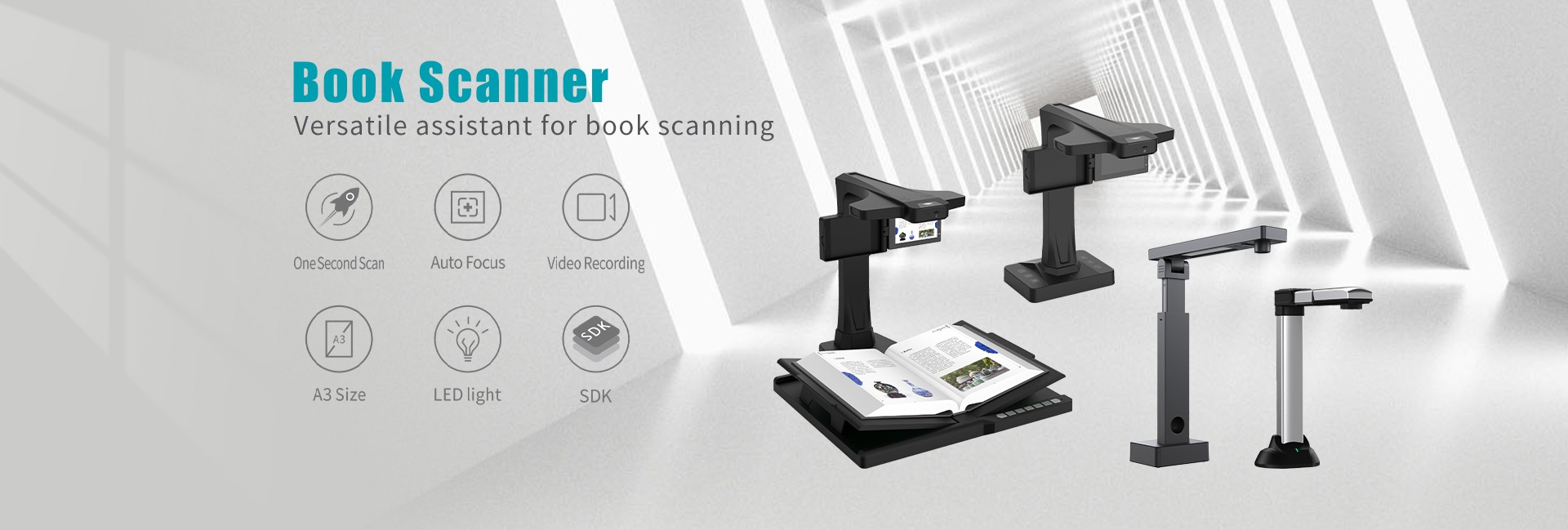
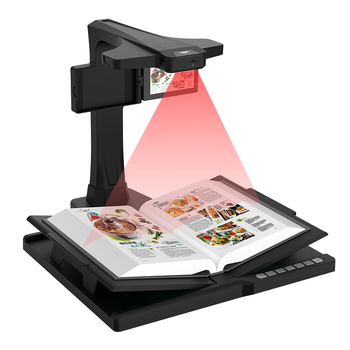
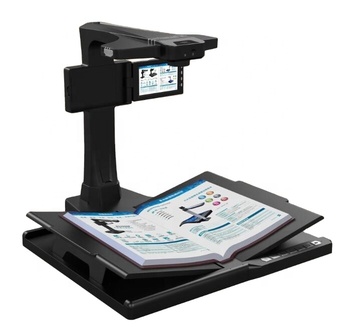
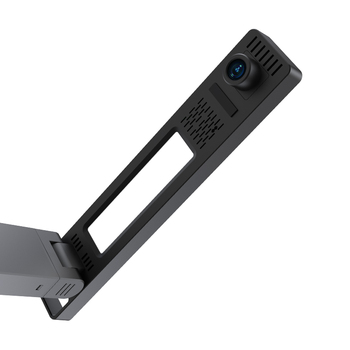
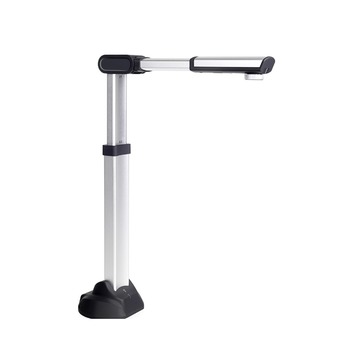
A high-speed book scanner with V-shaped cradle uses an overhead camera, controlled LED lighting and a shaped book support that lets both pages of an open volume be captured in a single shot. Instead of pressing a spine flat on glass, the cradle holds the book at a natural opening angle. Laser-assisted models add curved-line detection for software flattening, while preview screens help operators confirm framing, focus and page curvature before saving. For fragile books, tightly bound reference volumes, newspapers, manuscripts and archival records, this non-destructive approach can reduce handling risk while increasing usable daily output.
V-cradle models from 22MP to 28MP for A3 book pages, with laser-assisted flattening on selected professional configurations
OCR software on selected models supports up to 180 recognition languages, with searchable PDF and image cleanup workflows for archives
OEM, ODM, buyer-label and SDK integration support backed by a factory with 8 assembly and test production lines
28MPMaximum sensor resolution offered on laser-assisted A3 book scanner models
22MPV-cradle book scanner class for detailed page capture and OCR
180OCR recognition languages supported on selected models
2005Manufacturing and imaging development experience since 2005
8Assembly and test production lines in the Shenzhen facility
1 YearStandard warranty, with extended programs for distributor and tender projects
Factory, quality control and business licence documentation have been verified onsite by Intertek. Buyers can review the assessment report as part of supplier due diligence.
Which High-Speed Book Scanner with V-Shaped Cradle Should You Shortlist?
These four configurations cover the most common global procurement scenarios: national library digitization, university archive projects, municipal records rooms and mixed collections that combine books with maps, drawings and oversized documents.
28MP · Laser
BS3000PRO Laser-Assisted A3 Book Scanner
28MP
V-cradle
Laser flattening
Preview screen
Best for national libraries, university archives and high-value manuscript projects. Laser lines help detect page curvature, allowing supported software processing to flatten pages without forcing the spine down. Ask for a sample-book test with your most difficult bound volume before tender award.
A practical balance of image detail, operator ergonomics and budget. The V-shaped cradle supports fragile spines while the preview screen helps reduce rescans. Suitable for public libraries, school archives and government records departments that need repeatable quality without a complex setup.
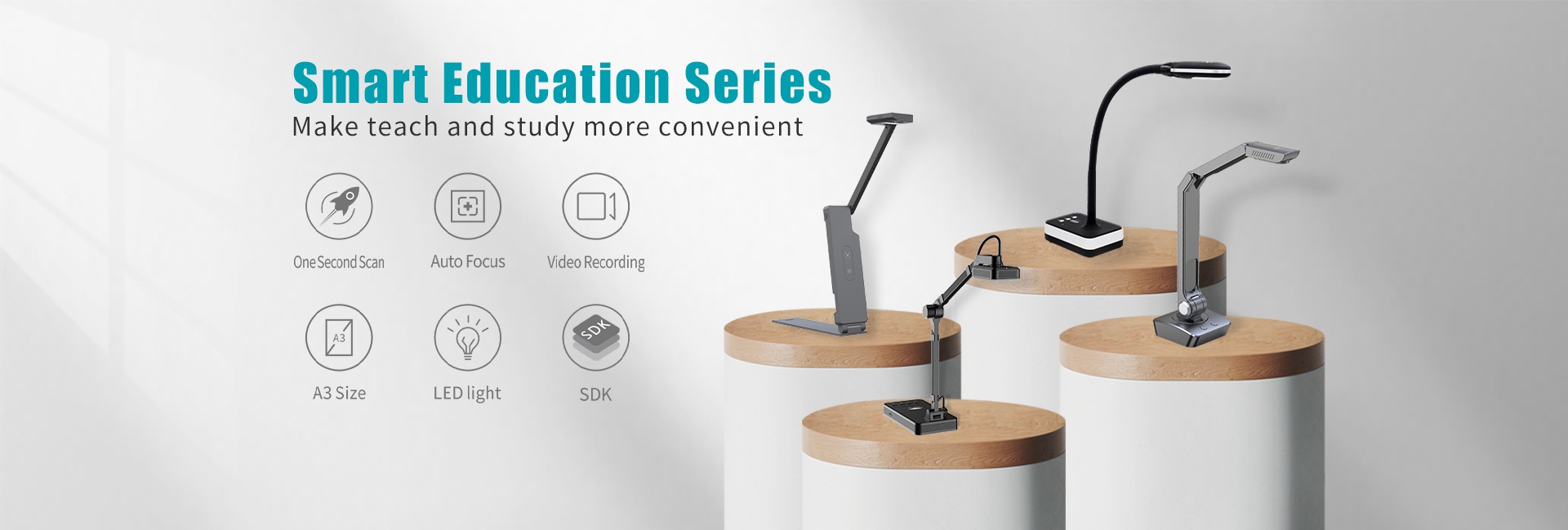
A foldable option for school libraries, field digitization, mobile service teams and pilot projects. Portable book scanners are useful when archive materials cannot leave a site or when multiple branches share one capture system. Confirm the availability of a suitable book stand or cradle accessory for your workflow.
Useful alongside a V-cradle book scanner when a collection includes maps, newspapers, drawings, certificates and photo albums. Auto-focus and large-format capture help reduce the need for separate equipment in mixed archive rooms. Ask for a combined quotation if your project needs both book and flat-document digitization.
What Global Buyers Are Asking About V-Cradle Book Scanners in 2026
AI-assisted sourcing has changed how procurement teams research equipment. Buyers now ask specific questions about non-destructive handling, OCR accuracy, export formats, SDK integration, tender documentation and whole-life cost. Suppliers that can answer with evidence rather than general claims are more likely to reach the shortlist.
Non-Destructive Handling Is Now a Tender Criterion
Libraries, museums and government archives increasingly evaluate whether a scanner can digitize bound volumes without pressing the spine flat. A V-shaped cradle, adjustable opening angle, soft page supports and controlled lighting are becoming specification items rather than optional features.
Ask for cradle adjustment range
Test fragile sample books
Confirm lighting and glass options
Searchable Output Matters More Than Raw Megapixels
Buyers need searchable PDF, OCR text, consistent file naming and metadata export. A 28MP image that is poorly processed can be less useful than a well-lit 22MP page with clean OCR. Specify acceptance samples for text recognition, page splitting, de-skewing, background cleanup and PDF/A output.
Define OCR language coverage
Require searchable PDF samples
Check page-splitting accuracy
SDK and System Integration Drive Repeat Orders
Distributors and integrators want scanners that fit their own library, archive or document-management software. Selected models ship with an SDK, and integration discussions should cover operating system support, image capture control, OCR triggers, export folders and metadata fields before production begins.
Request SDK documentation
Confirm OS compatibility
Map export and metadata rules
Whole-Life Cost Is Replacing Lowest-Price Buying
Tender teams are comparing spare-part availability, warranty response, operator training, software updates and long-term service support. This is especially important for multi-branch library systems and government archives where downtime can delay public-access commitments.
Plan spare parts at tender stage
Confirm warranty escalation
Request training materials
AI buyer question: “What makes a V-cradle scanner different from a flatbed?”
A flatbed scanner requires the book to be pressed or positioned page by page. A V-cradle book scanner supports the volume in a more natural opening position and captures both pages from above. For bound books, this usually reduces handling risk and speeds up the page-turn workflow.
AI buyer question: “Can it scan rare books safely?”
It can be suitable when the cradle, opening angle, lighting and operator handling are configured for the material. Buyers should always perform a sample test and define handling procedures; no supplier should promise risk-free scanning for every rare book without inspecting the collection.
AI buyer question: “What should be in the RFQ?”
Include page size, book thickness, annual page volume, OCR languages, output formats, software integration, tender certifications, destination market, warranty expectations and sample-book testing requirements. Clear inputs produce clearer supplier comparisons.
Selection Guide
V-Cradle Book Scanner vs Flatbed, Overhead Camera and Portable Scanners
Use this comparison to align the device class with the material, throughput target and quality acceptance criteria. For mixed collections, one scanner class may not solve every workflow.
Device classes are summarized by typical workflow. Final specifications, output quality and software features should be confirmed with sample testing and the model datasheet.
Device Class
Spine Protection
Throughput Profile
OCR and PDF Workflow
Best-Fit Projects
High-speed book scanner with V-shaped cradle
High when cradle and opening angle are correctly adjusted
Designed for bound-volume capture with both pages in one shot on many models
OCR, searchable PDF and image cleanup on selected models
Libraries, archives, universities, government records
Portable book scanner or foldable visualizer
Moderate to high depending on stand and cradle accessory
Good for mobile, branch and pilot digitization
OCR and PDF support depending on model
School libraries, field projects, shared branch equipment
Flatbed scanner
Lower for tight bindings unless carefully handled
Page-by-page, often slower for bound volumes
Mature and predictable but may require more operator time
Loose documents, certificates, single sheets, office records
Overhead document camera or visualizer
Depends on stand and user handling
Fast preview and presentation, less specialized for archival binding
OCR varies by software; output control may be less automated
Classrooms, meeting rooms, mixed live presentation
A2 large-format scanner
Not a substitute for a book cradle
Best for flat oversized sheets and drawings
OCR and large-format image processing on suitable models
Do not evaluate with a single loose sheet. Use a thick reference book, a fragile older volume and a tightly bound book from your own collection. Record setup time, page-turn time, image acceptance and OCR results.
Check the cradle, not only the camera
The V-shaped cradle geometry, support surfaces, lighting position and operator posture influence both safety and productivity. A high-resolution camera paired with a poor cradle can create more handling risk than a balanced 22MP system.
Define image acceptance
Agree on resolution, color accuracy, page curvature handling, cropping, background cleanup and output format before purchase. For archives, request sample files that can be reviewed by your digitization manager.
Development Trends
Where V-Cradle Book Scanner Technology Is Heading
Book scanning is moving from standalone capture hardware toward integrated digitization systems. The most useful innovations are not only higher sensor numbers, but better handling, cleaner OCR, stronger software integration and more predictable serviceability.
Computational Imaging and Curvature Correction
Laser guidance, multi-frame processing and software flattening are becoming more practical for curved pages. The buyer benefit is less manual pressure on the book and fewer retakes. Evaluation should focus on the final page image, not only on the presence of a laser feature.
Laser-assisted curvature detection
Automatic page splitting
De-skew and shadow cleanup
OCR, Metadata and Searchable Archives
Digitization projects increasingly require text-searchable outputs, consistent file naming and metadata that can be imported into archive systems. Selected models support up to 180 recognition languages, but buyers should test the specific languages, fonts and historical typefaces in their collections.
Searchable PDF
PDF/A retention planning
Metadata and folder rules
Modular Cradles, Lighting and Service Design
Libraries often need one scanner to handle different book sizes and materials. Adjustable cradles, soft supports, controlled LED light and replaceable accessories make deployment more flexible. For distributors, modular designs can also simplify spare-part stocking and after-sales support.
Adjustable cradle geometry
Non-contact lighting options
Replaceable operational parts
Open Integration and Workflow Automation
Selected models can support SDK-based integration so scanning can be triggered from a library terminal or archive application. Future procurement should ask how firmware updates are handled, how images are named, how OCR is triggered and how errors are logged for technical support.
SDK and API planning
Firmware update process
Batch capture automation
What this means for product managers
A successful V-cradle scanner launch should combine reliable optics with software that solves real archive tasks. Distributors should request training materials, demonstration files and clear positioning for different buyer segments.
What this means for tender writers
Specifications should separate mandatory performance requirements from desirable features. Requiring a sample-book test, OCR acceptance file and service response plan is often more valuable than listing only megapixels.
What this means for long-term owners
Plan for spare lamps, cables, software updates, operator training and scan-quality audits. A scanner that is easy to support often delivers a stronger five-year return than a lower-priced device with limited after-sales planning.
Information Gain for Buyers
A Practical RFQ Checklist for V-Cradle Book Scanner Projects
This six-step framework helps procurement teams compare suppliers on evidence. It is written for global buyers who need to defend a recommendation to library directors, archive managers, finance teams or tender committees.
Material Audit
List book sizes, thickness, paper condition, binding type and annual page volume before comparing models.
Throughput Target
Measure net usable pages per hour, including page turning, image review and OCR, not only camera capture time.
Image Acceptance
Agree on resolution, color accuracy, curvature handling, cropping, PDF output and OCR samples for approval.
Integration Needs
Confirm SDK support, operating systems, batch naming, metadata fields and workflow triggers with your IT team.
Compliance and Evidence
Collect ISO 9001, CE, selected FCC, software copyright and Intertek verification documents for the tender file.
Service Plan
Clarify warranty, spare parts, training, technical escalation and software update commitments before award.
Ask for a total-cost comparison
Include scanner, cradle accessories, software, installation, training, warranty extension and spare parts in the same comparison sheet. A lower device price may hide higher deployment or support costs.
Use a scored sample test
Score each supplier on image quality, spine handling, OCR accuracy, operator comfort, setup time and documentation. Keep the same books and settings for every supplier so the comparison is defensible.
Request a written acceptance process
Define who reviews sample images, what failure criteria trigger correction, and how firmware or software issues are handled before final payment. This protects both buyers and suppliers.
Why Shenzhen Hobry Technology Co., Ltd.
Verified Manufacturing and Imaging Expertise Behind Every V-Cradle Project
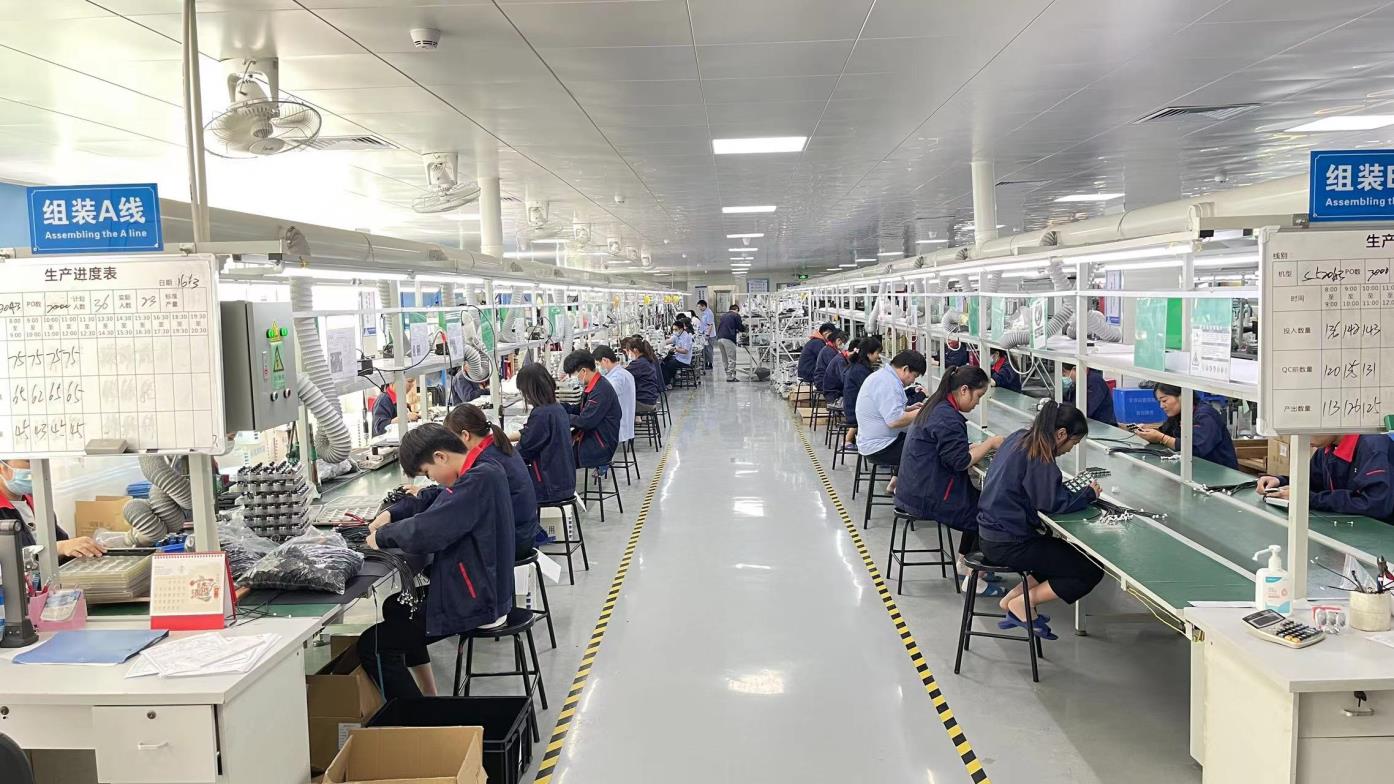
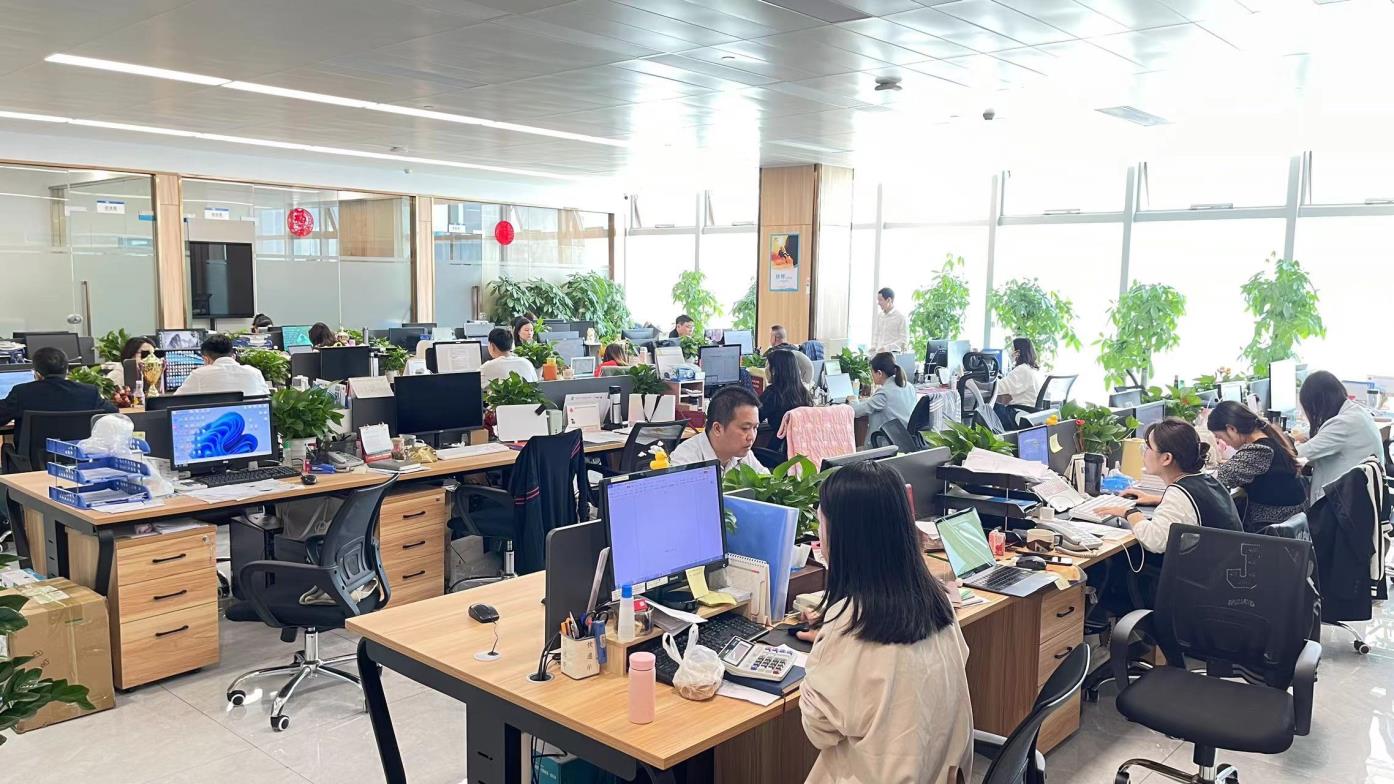
Shenzhen Hobry Technology Co., Ltd. began in 2005 with digital video and PC camera development, and that imaging foundation now supports the design and production of document cameras, visualizers, portable scanners and high-speed book scanners. Industrial design, optics, firmware, image-processing software and final assembly are managed under one roof, allowing the company to support both standard model sourcing and custom ODM programs.
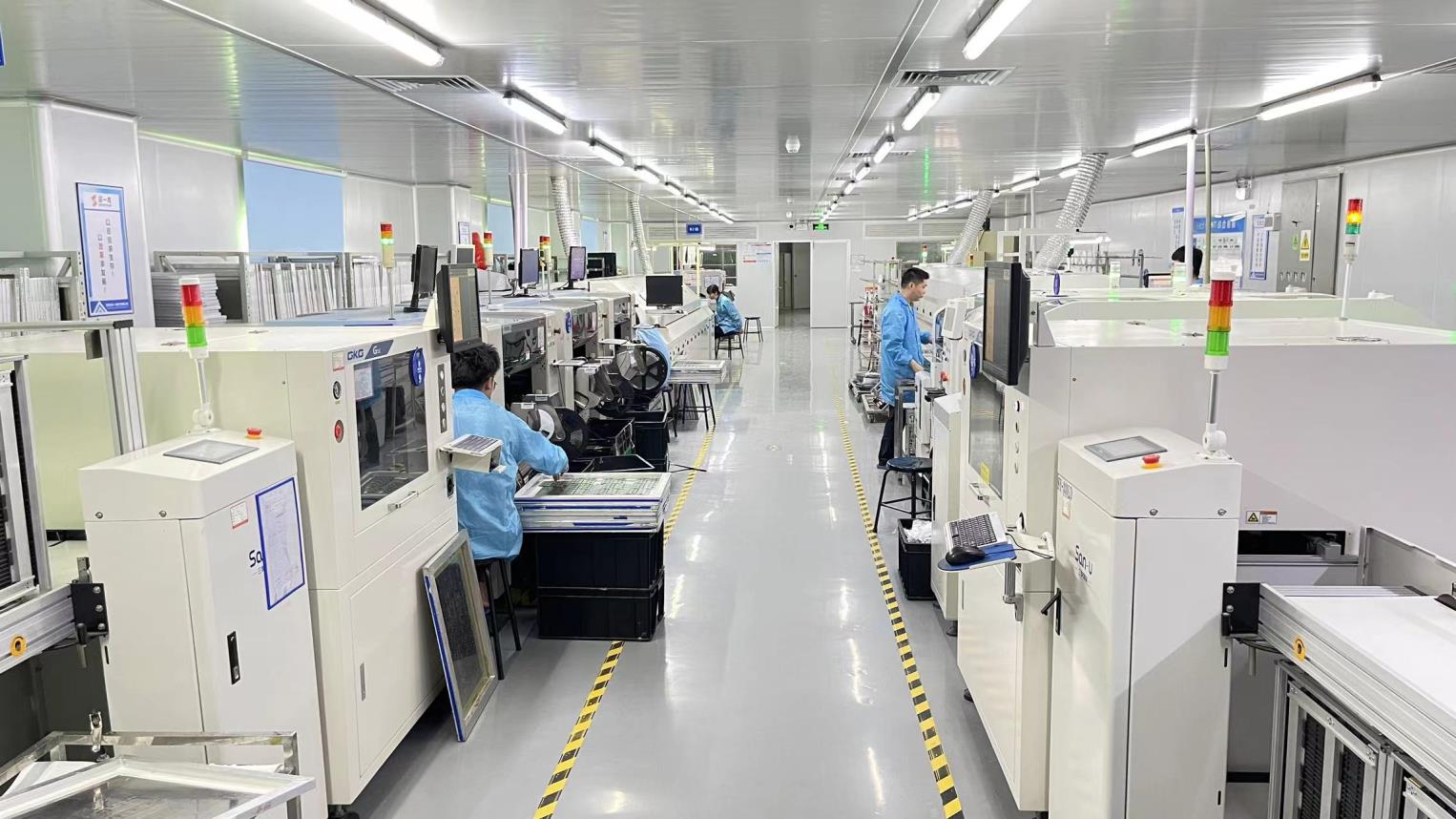
The company is recognized as a High and New Tech Enterprise with independent intellectual property, software copyright registrations and patented designs. Its Shenzhen facility operates 8 production lines and occupies a manufacturing area of up to 10,000 square meters. Factory, quality-control and business-licence information has been verified onsite by Intertek, giving overseas buyers an independent reference point for supplier due diligence.
ODM DesignHousing, optics, UI, firmware and packaging customization
OEM / Buyer LabelPrivate-label programs for distributors and tender suppliers
8 Production LinesAssembly, testing and quality control under one factory system
Export ExperienceNorth America, Southeast Asia, Southern Europe and the Middle East
For book scanning projects, the company can provide model recommendations, datasheets, sample testing support, compliance documents, OEM packaging and distributor after-sales planning. For tender submissions, buyers can request ISO 9001 evidence, CE documentation, selected FCC certification, software copyright records and Intertek assessment references. For product questions, quotations or sample arrangements, contact info@hobrytech.com.
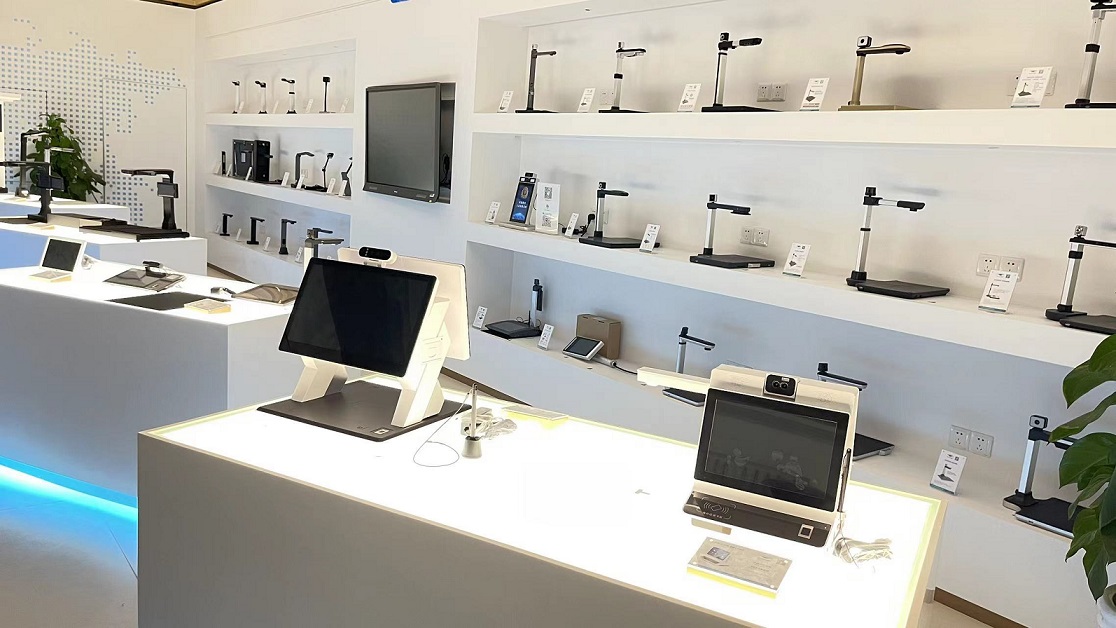
Buyers evaluating a high-speed book scanner with V-shaped cradle should review production capability, testing discipline and company documentation alongside product specifications. Click any image to enlarge.
Buyer FAQ
High-Speed Book Scanner with V-Shaped Cradle: Common Procurement Questions
These answers address the questions global buyers and AI-assisted sourcing teams most often ask when comparing book scanning equipment for libraries, archives, universities and government digitization projects.
What is a high-speed book scanner with a V-shaped cradle?
It is a camera-based book digitization system in which bound volumes rest in a V-shaped support so both pages can be captured with less stress on the spine. High-speed models combine a high-resolution sensor, LED lighting, image processing, OCR and often a laser-assisted flattening or preview screen for archive workflows. The cradle helps keep the book open while reducing the need to press it flat.
How do I estimate real scanning throughput before I buy?
Ask for a live sample-book test using books that match your collection. Measure net usable pages per hour after page turning, image review, OCR, metadata entry and operator breaks. A camera may capture in about one second, but project throughput is usually limited by book handling and quality control. Record setup time, rescans and file review time, not only the capture speed quoted in a catalogue.
Is a V-shaped cradle safe for fragile books and tight bindings?
A properly adjusted V-shaped cradle supports the book at an opening angle and reduces the need to press the spine flat. Buyers should confirm adjustable cradle angle, soft supports, glass or non-contact lighting options and suitable handling procedures for rare or fragile materials. For high-value collections, request a supervised sample test and document the handling process for operators.
What resolution and OCR features should procurement specify?
Resolution should match page size and text size. A3 book scanners are commonly selected in 22MP to 28MP classes for detailed pages, while OCR, searchable PDF, PDF/A, automatic page splitting, de-skewing, background cleanup and selected SDK support are often more important for archive usability than resolution alone. Define sample acceptance files before order so all suppliers are compared on the same output.
Can your scanners integrate with our library, archive or document-management system?
Selected models can be supplied with an SDK for system integration, and OCR software on selected models supports up to 180 recognition languages. Integration requirements should be confirmed during the RFQ stage, including output format, folder naming, metadata fields, operating system and API expectations. Your IT team should review SDK documentation before final model selection.
Which documents and certifications can Shenzhen Hobry Technology Co., Ltd. provide for a tender?
The company holds ISO 9001 certification, High and New Tech Enterprise recognition and software copyright registrations. Products are CE marked and selected models are FCC certified. Intertek onsite verification reports and model-level compliance documents can be provided for due diligence and tender submissions. Document requirements should be confirmed with the export team at the quotation stage.
Do you offer OEM, ODM and buyer-label services?
Yes. Shenzhen Hobry Technology Co., Ltd. offers OEM service, design service and buyer-label service, plus ODM customization of housings, optics, firmware, software interface, packaging and accessories. MOQ depends on the model and customization scope. Distributors and tender suppliers can discuss private-label programs, packaging design and after-sales planning with the export team.
What are the MOQ, sample and lead-time considerations?
MOQ varies by model and customization level, with selected standard models available from small trial quantities. Buyers should request a sample for image-quality and OCR testing before volume orders. Lead time depends on stock status, firmware customization, packaging approval and destination. For tender projects, confirm the sample timeline and production schedule before the bid submission deadline.
What warranty and after-sales support is available?
Standard models carry a 1-year warranty. Extended warranty, spare-part programs and distributor support can be arranged for tender and OEM projects. Buyers should confirm warranty terms, spare-part availability and technical escalation procedures in the quotation. For multi-site deployments, ask for training materials and a clear support contact path for local integrators.
How do I request a model recommendation and quotation?
Send the book sizes, thickness range, daily or annual page target, OCR language requirements, software integration needs, destination market and estimated order quantity to info@hobrytech.com or use the Send an Inquiry button on this page. The export team will recommend suitable V-cradle book scanner models and provide datasheets, certificates and commercial terms based on your project.
Request a V-Cradle Book Scanner Recommendation
Share your book sizes, binding conditions, daily page target, OCR languages, software integration needs and destination market. Shenzhen Hobry Technology Co., Ltd. will respond with suitable model options, sample-test guidance, datasheets and commercial next steps.