Top China Overhead Document Scanner Suppliers & Exporter
A practical procurement and product-development guide for A4, A3 and A2 overhead document scanners, book scanners and classroom visualizers — supported by verified factory evidence, eight model recommendations and the operating experience of Shenzhen Hobry Technology Co., Ltd.
Eight Overhead Document Scanner and Visualizer Models for B2B Buyers
The shortlist below matches real procurement scenarios: compact counters, A3 office archiving, hybrid classrooms, SDK integration and portable Type-C deployment. Every model is presented with its original product image and URL for direct specification review.
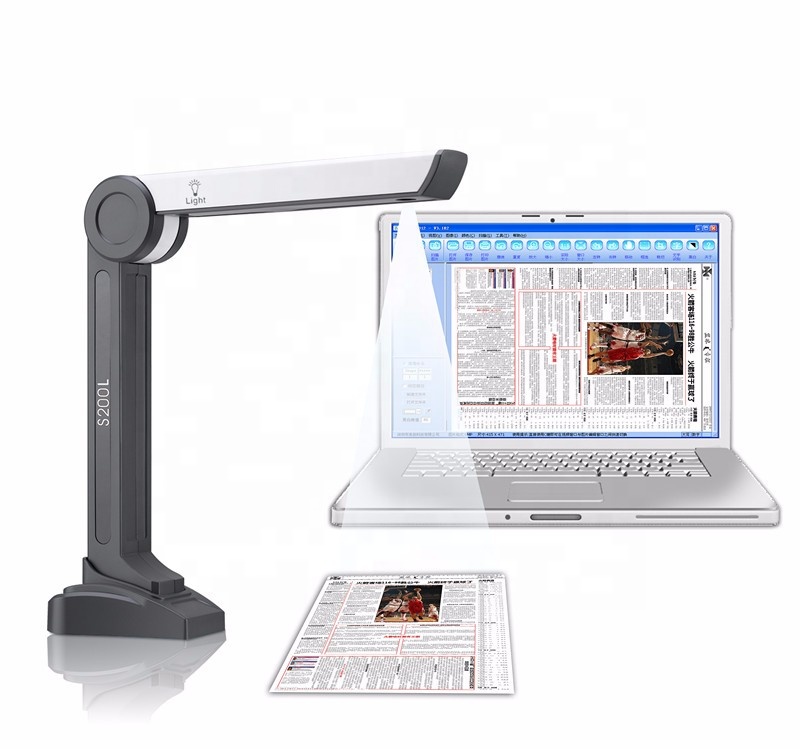
Eloam USB 2.0 Interface Mini Portable Document Scanner Visualizer A4 Size CMOS Sensor 1 Second Scan Speed 1600x1200 Resolution
A compact A4 visualizer for banks, reception desks and district offices where counter space is limited. The CMOS sensor, 1600×1200 resolution and one-second scan rhythm suit forms, identity documents and daily service records; USB 2.0 keeps installation simple.
- A4
- 1-second scan
- 1600×1200
- USB 2.0
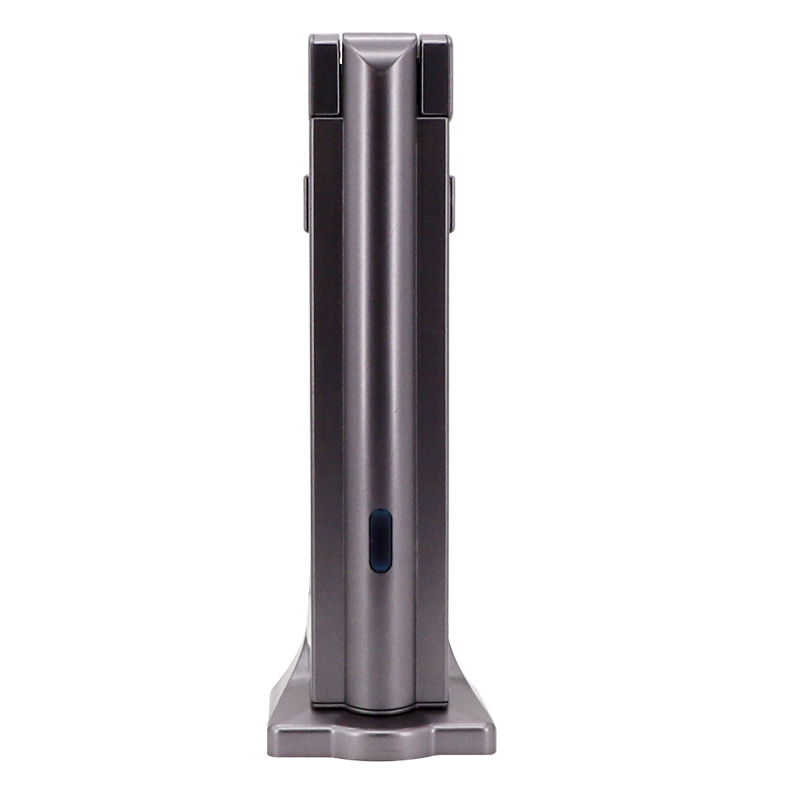
ELOAM Auto-Focus A3 10MP Portable Document Scanner USB Interface 1S Scan Speed Automatic Continuous Scanning Windows 10/11
An A3 auto-focus model for continuous office scanning. 10MP capture, one-second scan speed, automatic continuous scanning and Windows 10/11 support make it relevant for invoice batches, student records and branch-level digitisation where operators need repeatable throughput.
- A3
- 10MP
- Auto-focus
- Windows 10/11

ELOAM 3-in-1 Document Scanner USB A3 5MP FPDA Handheld Camera Control Buttons Digital Document Camera
A 3-in-1 A3 document camera with 5MP capture and handheld camera control buttons. It is useful when a school, training centre or meeting room needs a visualizer, scanner and presentation camera without purchasing three separate devices.
- A3
- 5MP
- 3-in-1
- Control buttons
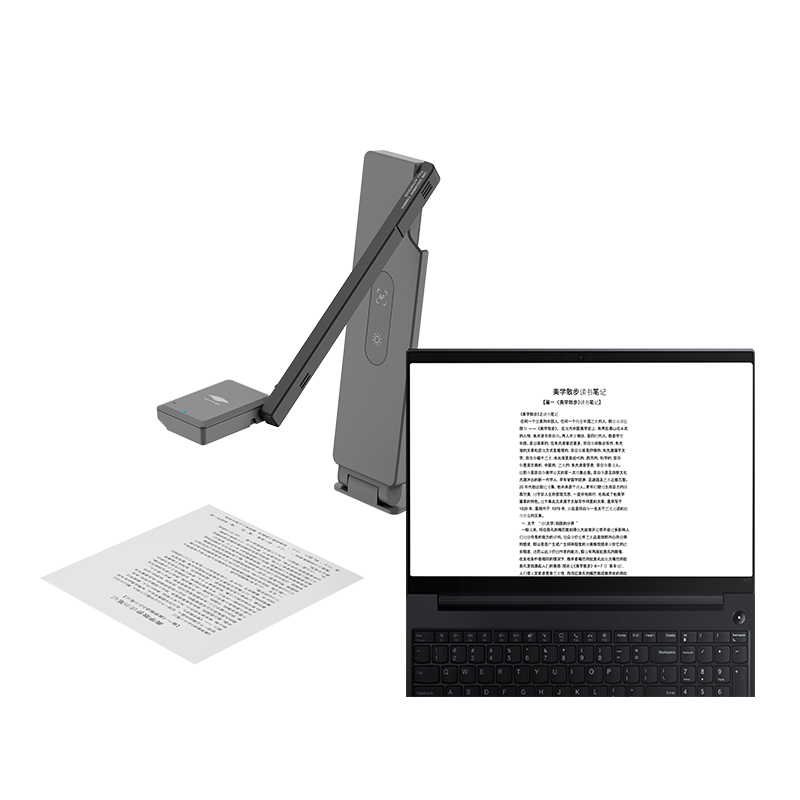
ELOAM High Resolution A3 Portable Document Scanner & Camera 3-in-1 | USB Type-C Plug Play Teaching Office Conference Use Stock
An A3 portable document scanner and camera with USB Type-C plug-and-play. The 3-in-1 design fits teaching, office conference and mobile project work where installers want fewer cables, faster deployment and a clean user experience.
- A3
- USB Type-C
- Plug & play
- Teaching
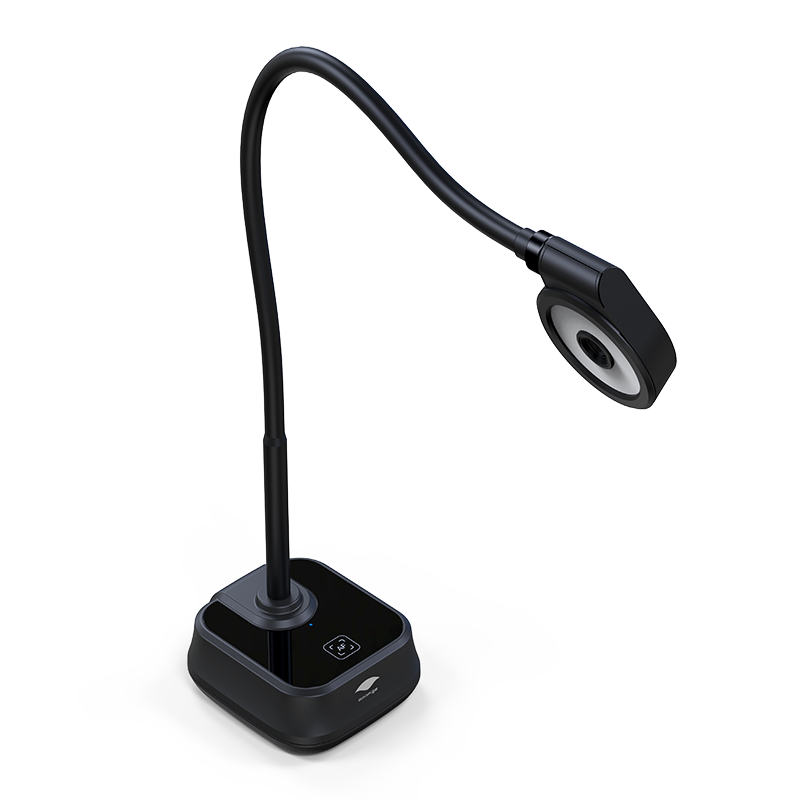
ELOAM VH800S A4 High-Speed USB Portable Video Booth & Document Scanner with OCR in Stock for Classroom and Meeting Use
An A4 high-speed USB video booth and scanner with OCR for classroom and meeting use. This model targets live demonstration and text capture, helping schools standardise on a compact visualizer that can also archive notes, handouts and whiteboard content.
- A4
- OCR
- USB
- Video booth
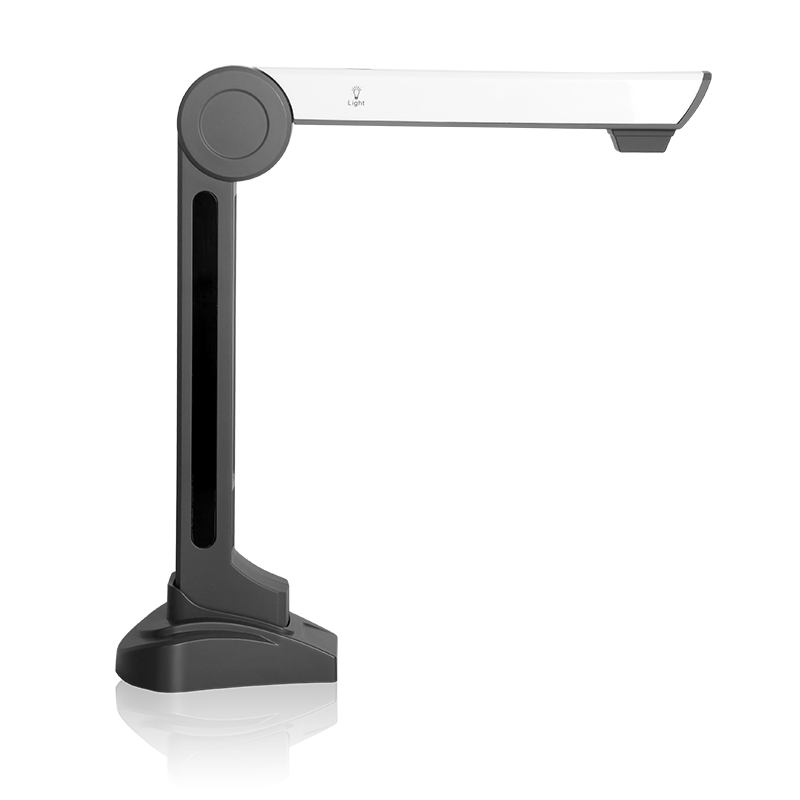
Eloam S500P 5MP Ultra Portable High-Speed OCR Document Scanner with USB SDK for School and Office Use in Stock
A 5MP ultra-portable OCR document scanner with USB SDK. For system integrators, the value is not only size but integration: SDK access can connect capture workflows to student systems, service counters or document management software.
- 5MP
- OCR
- USB SDK
- Portable
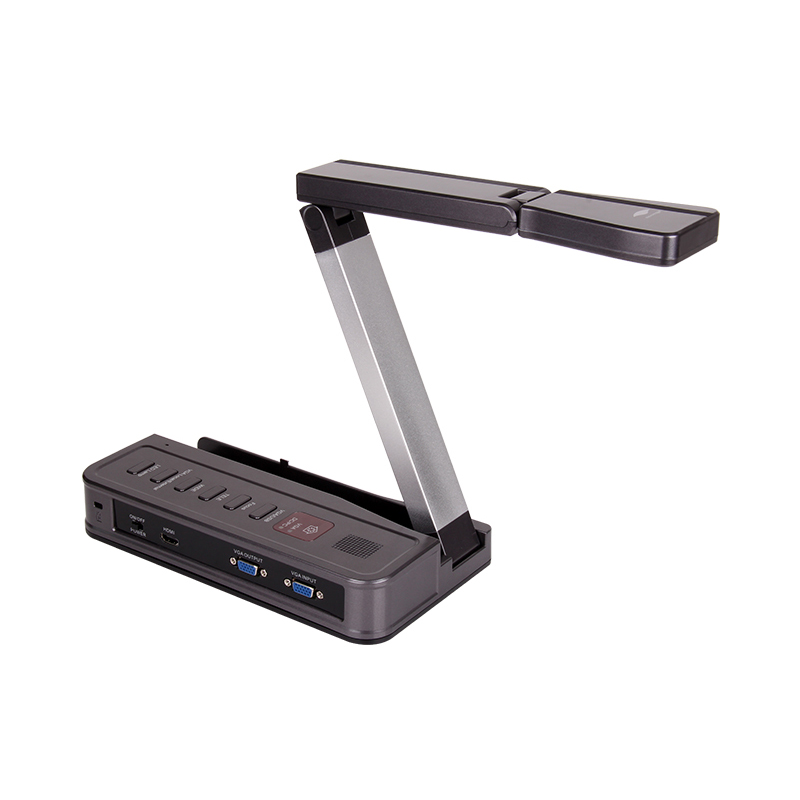
Eloam Portable A4 5MP 30FPS USB Type-C 3-in-1 Interactive Document Camera Projector Visualizer
A portable A4 5MP 30FPS USB Type-C 3-in-1 interactive document camera, projector and visualizer. The 30FPS live video is relevant to hybrid lessons, lab demonstrations and conference rooms that need smooth motion and natural handwriting visibility.
- A4
- 30FPS
- USB Type-C
- Interactive
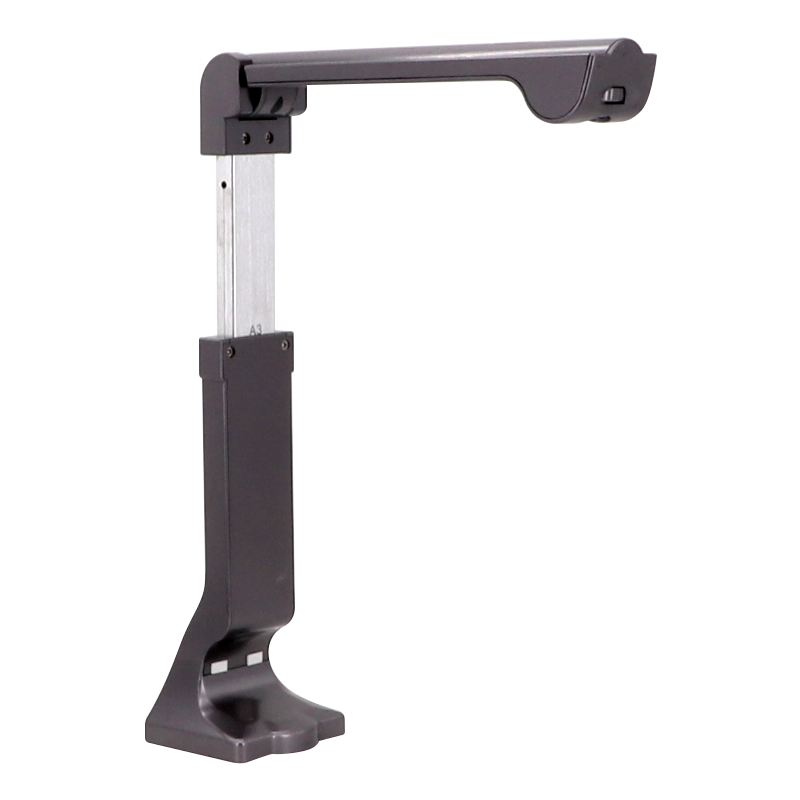
ELOAM S600 10MP CMOS A3 Folding Document Scanner with USB Interface and OCR Camera Gray 1-Year Warranty in Stock 1-Second
A 10MP CMOS A3 folding document scanner with USB and OCR, gray housing, one-year warranty and one-second capture. It is a practical A3 workhorse for offices that fold or store equipment between sessions and need dependable archive output.
- A3
- 10MP
- Folding
- 1-year warranty

What Separates a Reliable China Overhead Document Scanner Exporter From a Catalogue Reseller?
For global distributors, school groups, banks and system integrators, the phrase “China supplier” is not a quality statement by itself. It is a sourcing situation that must be qualified. A credible overhead document scanner exporter should be able to prove four things: stable manufacturing, repeatable image quality, software and SDK capability, and a documented export process.
Shenzhen Hobry Technology Co., Ltd. is a manufacturer with an integrated export function, not a pure trading company. Founded in 2005, the company operates eight production lines in a 5,000–10,000 m² facility in Shenzhen, employs 101–200 people and has been verified onsite by Intertek. Its product portfolio includes A4, A3 and A2 overhead document scanners, book scanners, classroom visualizers and portable extender monitors.
2026–2030 Buying Trends in Overhead Document Scanning
Buyers are moving away from “a camera on an arm” as a single specification. They are evaluating the complete capture workflow: OCR quality, installation time, privacy, SDK access, serviceability and total cost of ownership.
AI-Ready OCR and Structured Output
Procurement teams increasingly ask for OCR that feeds searchable PDFs, metadata fields and downstream document systems. The highest-value suppliers will document language coverage, output formats, accuracy expectations and SDK options instead of presenting OCR as a vague feature.
One-Cable USB-C and Plug-and-Play
USB Type-C reduces installation friction in classrooms, conference rooms and mobile offices. For fleet buyers, one-cable deployment means fewer adapters, fewer support tickets and faster replacement at the point of use.
Hybrid Teaching and Live Demonstration
Schools and training providers continue to equip blended classrooms. A visualizer must support live 30FPS motion, clear handwriting, lab specimens and quick document switching without demanding specialist AV skill from teachers.
Privacy-First Local Capture
Banks, government counters and healthcare-adjacent users need clear data-flow answers: does capture happen locally, where are images stored, and can buyers disable cloud services? Privacy documentation is becoming a tender requirement, not a technical footnote.
Total Cost of Ownership Over Unit Price
Request sample failure rates, warranty terms, spare-part support and packaging protection. A slightly higher unit price can reduce refund cost, installation labour and downtime across a 1,000-unit deployment.
SDK-Led Integration and Customisation
System integrators now evaluate SDK availability early. The scanner or visualizer may be one component inside a student-record platform, KYC workflow or archive system, so API documentation and firmware customisation matter as much as image resolution.
How the Next Generation of Overhead Scanners Will Be Judged
Hardware roadmaps are converging around optical quality, edge intelligence and deployment simplicity. These trends matter to distributors because they affect which models remain sellable after a single tender cycle.
Optical Zoom Beats Digital Zoom
As buyers display scans and live video on large projectors, digital enlargements reveal softness. Optical zoom and better lens design preserve fine print, circuit boards and lab detail without forcing users to move the camera physically.
Edge AI for Auto-Crop and Enhancement
On-device processing can handle page flattening, shadow reduction, background cleanup and document edge detection. Edge processing also supports privacy-first positioning because the capture decision happens locally.
Foldable and Space-Efficient Hardware
Counters, mobile sales teams and small classrooms rarely have dedicated scanner rooms. Folding A3 models, compact A4 visualizers and portable Type-C designs will continue to gain share over bulky fixed installations.
Multi-Modal Visualizers
Schools increasingly prefer one device that can work as a document camera, scanner, webcam and presentation tool. The 3-in-1 category is becoming a practical procurement category rather than a marketing label.
Low-Power and Sustainable Packaging
Low-carbon office concepts, reduced packaging waste and low standby power are now part of corporate purchasing scorecards. Suppliers that can document these choices will be better positioned with public-sector and education buyers.
Device Management and Firmware Updateability
Large fleets require predictable firmware, version control and support documentation. A scanner should not become unsupported simply because a buyer upgrades to Windows 10/11 or changes its document management system.
How to Compare China Overhead Document Scanner Suppliers & Exporters
Use the following matrix in an RFQ, supplier audit or sample review. It converts vague assurances into evidence requests that can be compared across candidate factories.
| Evaluation Area | What to Request | Why It Matters | Risk Signal |
|---|---|---|---|
| Legal supplier identity | Factory name, business licence, production address and export history. | Separates a manufacturer with integrated export function from a reseller relabelling stock. | Refusal to show production location or incomplete company information. |
| Factory verification | Intertek onsite report, ISO 9001, High-Tech Enterprise certificate and software copyright records. | Supports E-E-A-T and gives procurement a third-party reference point. | Certificates that cannot be linked to the legal entity or product scope. |
| Imaging performance | Sample scans for A4/A3/A2 documents, handwriting, bound pages, ID cards and low-contrast text. | Megapixels alone do not prove OCR accuracy, colour consistency or edge sharpness. | Only rendered marketing images are supplied; no raw sample files are available. |
| Software and SDK | SDK availability, supported operating systems, OCR languages and output formats. | Reduces integration risk for schools, banks, archives and system integrators. | “Customisation available” promises with no technical contact or documentation. |
| Production capability | Production-line count, factory area, employees, QC process and packaging protection. | Helps estimate whether the supplier can support rollout volume and spare-part continuity. | No in-process inspection or finished-product testing description. |
| Commercial terms | Sample policy, MOQ by model, OEM/ODM scope, warranty, payment and delivery terms. | Prevents hidden cost when comparing FOB, CFR, CIF and EXW quotations. | Unclear warranty responsibility or no sample unit path. |
Evidence Behind the Supplier Claim
Trust is built from verifiable operations. The following advantages are drawn from the company profile and original website content of Shenzhen Hobry Technology Co., Ltd.
Two Decades in Imaging
Founded in 2005, the company began in digital video technology and expanded into high-speed portable document scanners and document cameras. The team controls industrial design, optics, firmware, software, manufacturing and global sales in-house.

Intertek-Verified Factory
The Shenzhen factory has been inspected onsite by Intertek, a third-party inspection company. The assessment covers premises, production capability, quality control and legal status, giving buyers a documented due-diligence starting point.
8 Production Lines and 101–200 Employees
Manufacturing takes place in a 5,000–10,000 m² facility with eight production lines. This scale supports OEM and ODM work for distributors, education suppliers and system integrators without relying solely on external assembly.
OEM / ODM and SDK Capability
OEM, ODM, design service and buyer-label service are available. Customisation can include logo, packaging, housing colour, firmware and software. An SDK is available on selected models for integration into customer systems.
Certifications and Quality Management
The company holds ISO 9001 quality management certification, a National High-Tech Enterprise certificate and software copyright registrations. Products are CE certified, with FCC available on selected models. Standard warranty is one year.
Export Terms and Global Markets
Accepted payment terms include T/T, L/C, PayPal and Western Union in USD. Delivery terms include FOB, CFR, CIF and EXW. Main markets cover North America, Southeast Asia, Southern Europe, the Middle East and worldwide distribution.
Which Overhead Document Scanner Fits Which Procurement Scenario?
The fastest way to narrow a supplier catalogue is to map the end user to scan area, document type, installation environment and integration needs. The selections below use the eight recommended models from this guide.
| Use Case | Recommended Model | Why It Fits | Buyer Check |
|---|---|---|---|
| Compact service counter | Eloam USB 2.0 Mini A4 Visualizer | A4 footprint, one-second scan rhythm and USB 2.0 installation. | Confirm counter-space clearance and form-capture workflow. |
| General A3 office archive | ELOAM S600 10MP A3 Folding Scanner | A3 capture, folding body, OCR and one-year warranty. | Test folded documents, colour pages and storage durability. |
| Continuous branch scanning | ELOAM Auto-Focus A3 10MP Scanner | Auto-focus, continuous scanning and Windows 10/11 support. | Validate daily duty cycle and operator training time. |
| Classroom live demonstration | ELOAM VH800S A4 USB Video Booth | OCR, classroom focus and compact USB deployment. | Check teacher software, display resolution and audio needs. |
| Hybrid teaching with smooth motion | Eloam Portable A4 5MP 30FPS USB-C | 30FPS live video, 3-in-1 use and Type-C plug-and-play. | Test motion smoothness and projector compatibility. |
| Hands-on A3 teaching | ELOAM 3-in-1 A3 5MP Document Camera | Handheld camera control buttons and 3-in-1 functionality. | Confirm room layout and presenter control preferences. |
| SDK integration project | Eloam S500P 5MP OCR Scanner with USB SDK | SDK access for connecting capture to customer software. | Request technical documentation and test scope. |
| Portable A3 conference use | ELOAM High Resolution A3 USB Type-C 3-in-1 | A3 portability, Type-C and multi-use presentation value. | Validate travel case, cable set and meeting-room power. |
Questions Global Buyers Ask Before Ordering Overhead Scanners
These answers are written for B2B buyers evaluating a China manufacturer or exporter. Final commercial terms should always be confirmed in the quotation for the selected model and customisation level.
Is Hobry a manufacturer or a trading company?
Shenzhen Hobry Technology Co., Ltd. is a manufacturer with an integrated export function. Founded in 2005, the company runs eight production lines in a 5,000–10,000 m² facility in Shenzhen, and its factory has been verified onsite by Intertek.
Do you offer OEM and ODM?
Yes. OEM, ODM, design service and buyer-label service are available, including logo printing, custom packaging, housing colour, firmware and software customisation. SDK support is available on selected models for system integration.
Which OCR languages and systems are supported?
Selected models support OCR in up to 180 languages with output formats such as PDF, JPEG and TIFF. Windows is supported across the range, and macOS is supported on selected large-format models. Confirm per-model compatibility before ordering.
Can I order a sample before a bulk order?
Most models are available as single-unit samples for evaluation. Bulk MOQ depends on the model and the level of customisation, and it is confirmed in the formal quotation after the sample and configuration are agreed.
Which payment and delivery terms are accepted?
Accepted payment terms include T/T, L/C, PayPal and Western Union in USD. Accepted delivery terms include FOB, CFR, CIF and EXW. Buyers should confirm the applicable Incoterm and destination port in the quotation.
What certifications and warranty are available?
Products are CE certified, with FCC available on selected models. The company holds ISO 9001 quality management certification, a National High-Tech Enterprise certificate and software copyright registrations. Standard warranty is one year.
What should an RFQ include?
Include scan area, resolution target, document type, operating system, estimated annual volume, target market, certification needs, branding requirements, SDK needs and desired delivery term. This helps the supplier recommend a realistic model and configuration.
How should buyers evaluate image quality?
Request sample scans of small text, handwriting, colour charts, bound pages, ID cards and low-contrast documents. Compare raw files rather than rendered marketing images, and test OCR output in the language and format your users actually need.
Build a Shortlist With Engineering Input, Not Guesswork
Send your scan area, resolution target, operating system, deployment volume, target market, branding requirements and SDK needs. The supplier team can then recommend a model, confirm sample availability and prepare a quotation for your procurement review.
Get Catalog