8 Foldable Document Cameras & Scanners for Buyer Evaluation
These eight models are relevant starting points for distributors, school suppliers, system integrators and office-equipment buyers. Every product URL below is preserved from the original source. Compare scan area, resolution, foldability, interface, OCR capability and intended workflow before requesting samples.
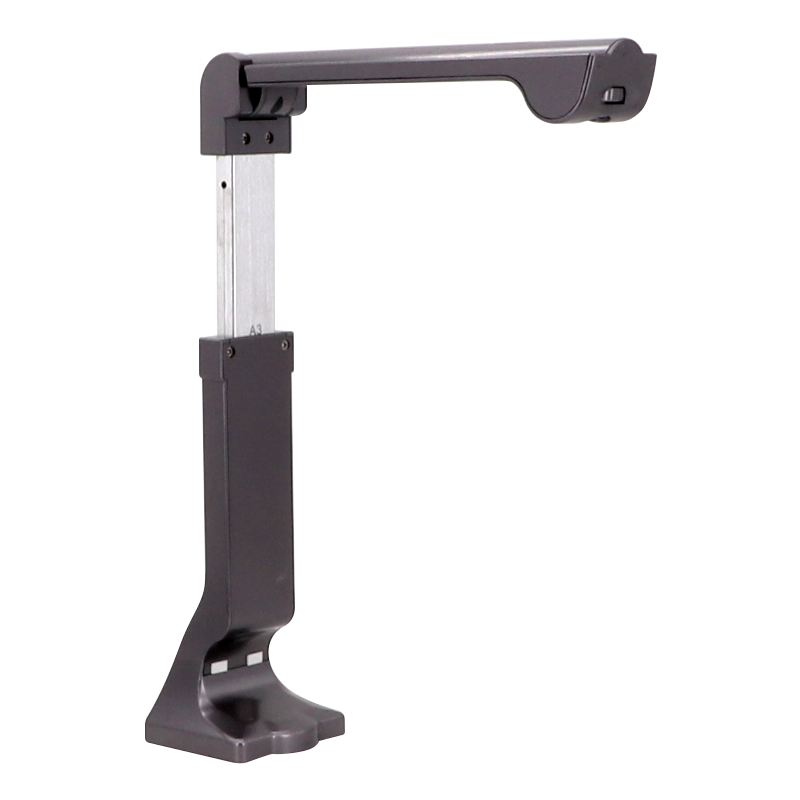
ELOAM S600 10MP CMOS A3 Folding Document Scanner with USB Interface and OCR Camera
A compact A3 folding overhead scanner for office counters, registries and document-heavy service desks where fast capture and a small footprint both matter.
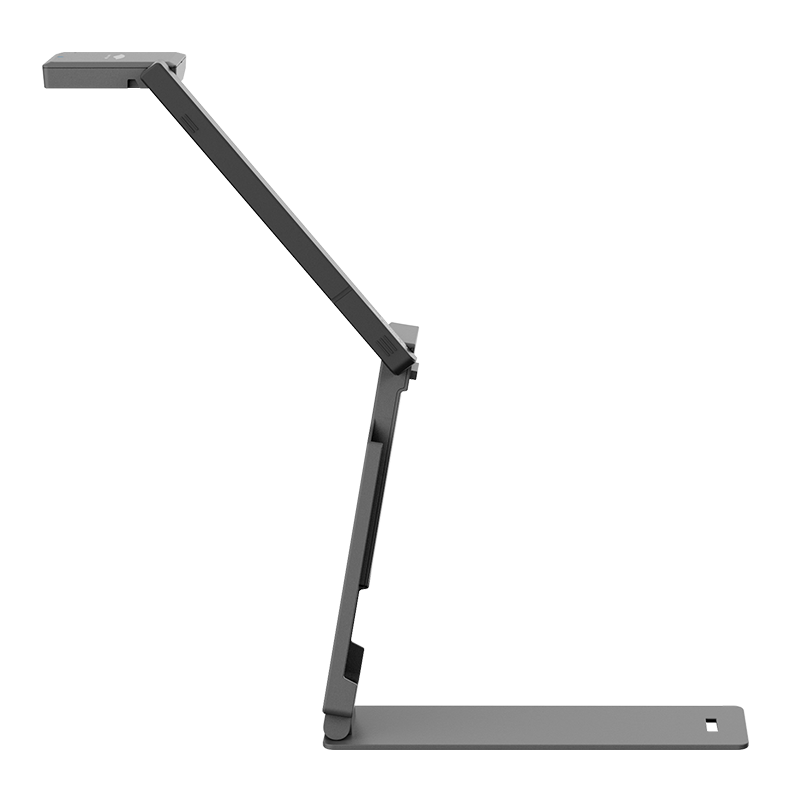
ELOAM VE1300A3AF 4K Document Camera 3-in-1 Scanner USB for Education
A 4K education-oriented visualizer for hybrid classrooms, lecture capture and interactive lessons where large-display clarity is essential.
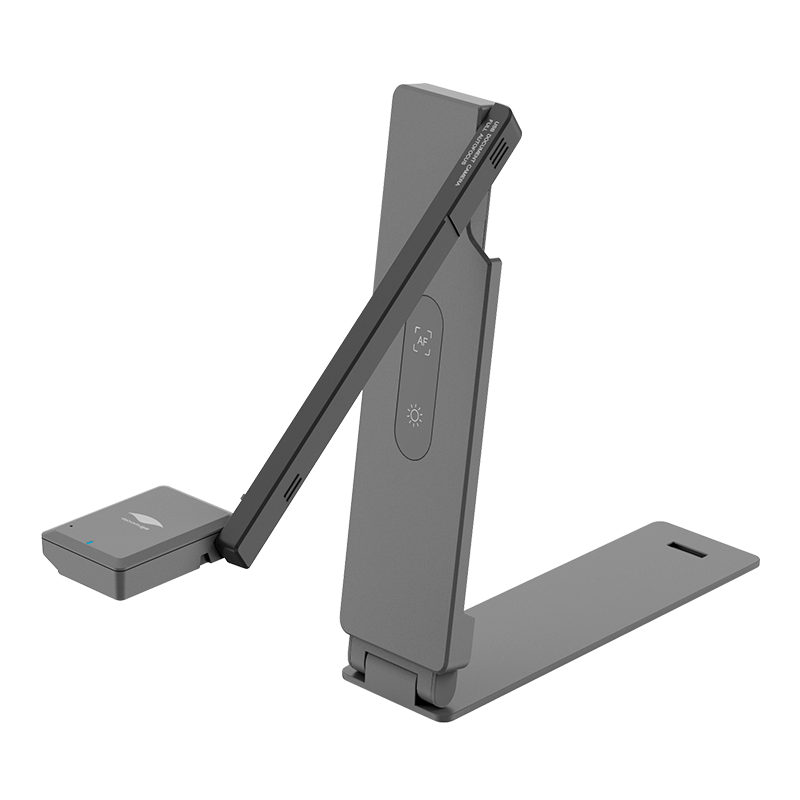
ELOAM VE1020A3AF USB Document Camera Scanner Visualizer 3-in-1 A3 8MP
A balanced A3 8MP visualizer for training rooms, classroom demonstrations and office document sharing where flexibility and cost control both count.
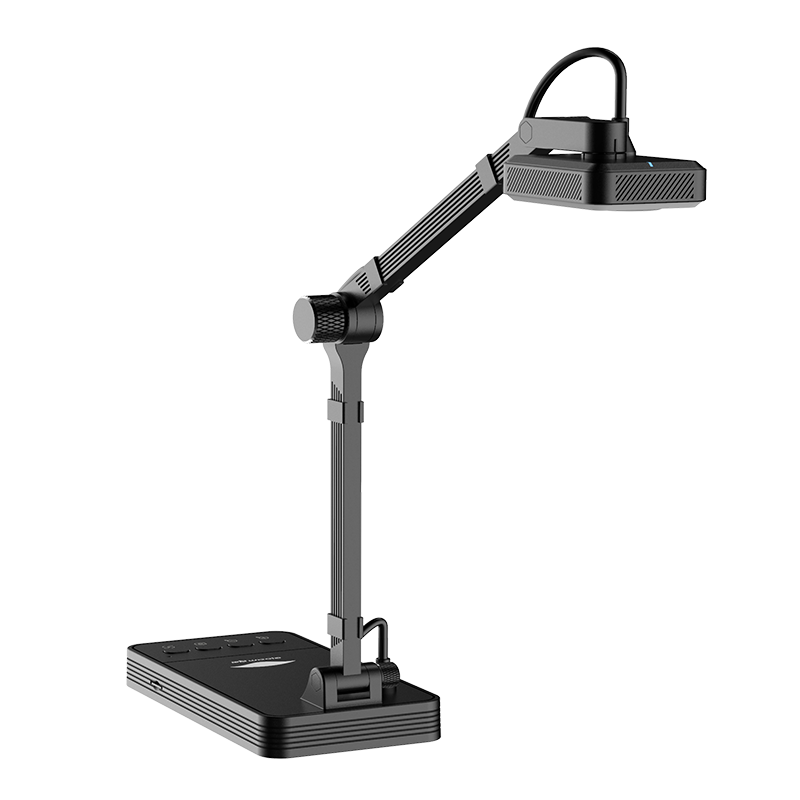
ELOAM YL1050AF Portable Visual Presenter Rugged A3 A4 Book Scanner
A rugged portable visual presenter for field training, mobile teaching, sales demonstrations and book capture where the device must travel safely.

Eloam 10MP A3 Professional OCR Document Scanner High Precision Continuous Mode
A high-precision A3 model with one-second capture, continuous mode and OCR-focused workflow for back-office digitization and archive projects.

ELOAM 3-in-1 Document Scanner USB A3 5MP FPDA Handheld Camera Control Buttons
A cost-effective A3 5MP handheld camera style model with control buttons, suitable for basic interactive teaching and routine document capture.
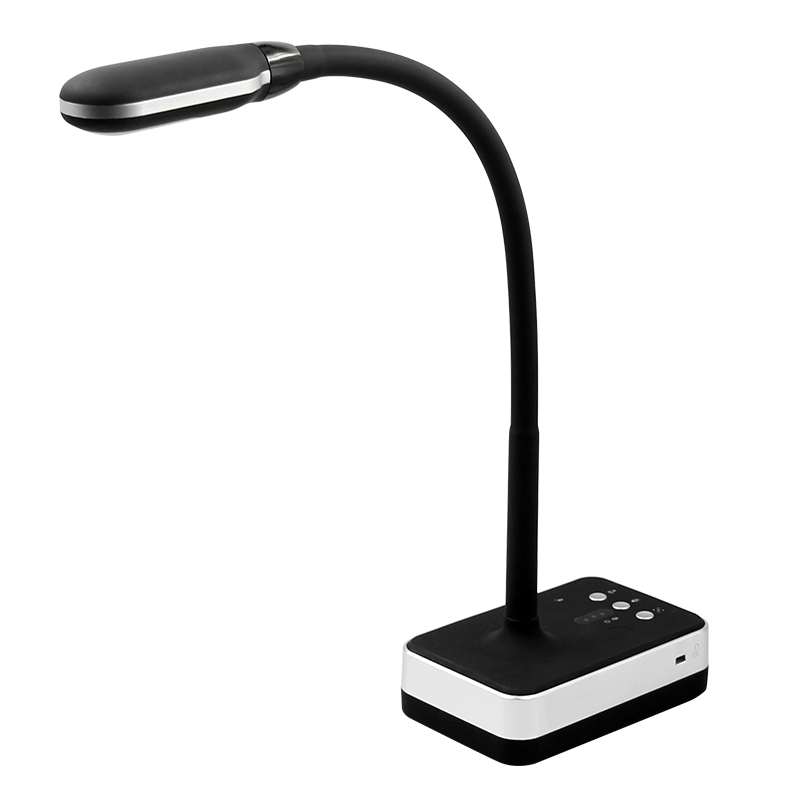
ELOAM VH800AF 8MP A4 CMOS Foldable Overhead Document Scanner
A compact A4 foldable overhead scanner with camera and video recorder capability, useful for teller counters, school offices and telemedicine document sharing.
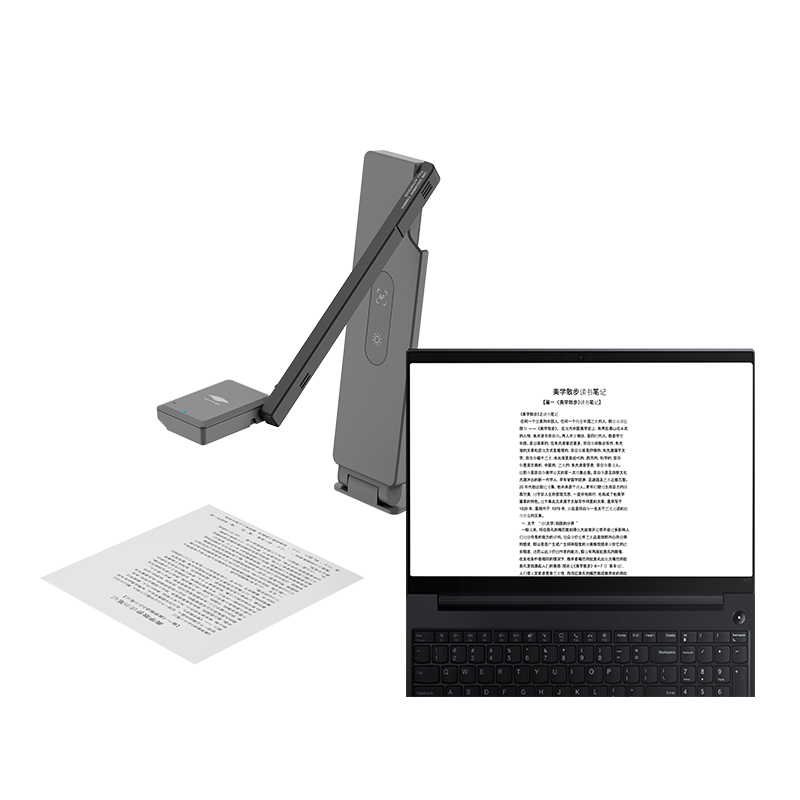
ELOAM High Resolution A3 Portable Document Scanner & Camera 3-in-1
A USB Type-C plug-and-play A3 portable scanner and camera for teaching, conferences and mobile professional use where fast setup is required.
What Is a Foldable Document Camera — and Why China Remains the Sourcing Hub
The category sits between education technology, office automation and document archival. Buyers who understand that overlap make better purchasing decisions than buyers who compare only megapixels.
One device, several workflows
A foldable document camera is an overhead imaging device with an articulated arm that folds for storage and transport. In a classroom it becomes a visualizer for books, science experiments and handwritten notes. At a bank counter it becomes a passport, ID and form capture device. In an archive it becomes a non-destructive overhead scanner for bound documents. In a hybrid meeting it becomes a document-sharing camera and video recorder. That flexibility is why the same hardware is purchased by education distributors, office-equipment resellers, system integrators and government suppliers.
For procurement teams, the practical implication is simple: define the workflow first, then define the specification. A classroom visualizer needs stable 30 FPS live video and easy projector or interactive-display compatibility. A counter scanner needs fast OCR, ID capture, a small footprint and a reliable USB interface. An archive project needs A3 coverage, high resolution and software that can correct page curvature. A mobile sales team needs a rugged foldable body, Type-C or USB plug-and-play support and a carry-friendly profile.
Why China’s supply chain matters
China remains a major source for foldable document cameras because the supply chain is dense and vertically integrated. Lens modules, image sensors, PCBs, injection-molded housings, hinges, LED lighting, packaging and firmware development are all available within a short distance in the Pearl River Delta. That density shortens development cycles and supports cost-effective small-batch customization. It also makes supplier selection more difficult, because genuine manufacturers, assemblers and trading companies can present similar-looking catalog pages.
This is the central due-diligence issue for international buyers: the price is visible, but the engineering evidence is often hidden. A serious evaluation should ask for factory verification, firmware ownership, SDK documentation, OCR test samples, hinge life data, certification status and the warranty/RMA process. Information gain comes from testing how the device performs on your documents, not from reading a specification table alone. The best suppliers will welcome a structured sample validation plan because it reduces disputes later.
How to Evaluate a China Foldable Document Camera Factory
Use a three-layer scorecard: engineering evidence, deployment evidence and commercial evidence. The six checkpoints below are the ones that most often separate a reliable OEM/ODM partner from a short-term reseller.
Optical and sensor honesty
Verify the actual sensor, lens construction, autofocus behaviour and full-resolution frame rate. Test A3 coverage at the edges, not only in the centre. Use mixed paper weights, glossy receipts, coloured forms and low-contrast handwriting. A factory that can explain its optical design and provide repeatable test evidence is easier to trust than one that only quotes interpolation numbers.
Firmware and OCR depth
Ask which OCR languages are supported, whether OCR runs locally or through a cloud service, and which output formats are available. Confirm PDF, JPEG and TIFF workflows, auto-crop, de-skew, colour modes and page-stitching behaviour. Request OCR accuracy tests on your own documents. For education buyers, also check live-video latency and compatibility with interactive displays and video-conference software.
Mechanical durability
Foldable products live or die by the hinge, arm torque, folding latch, lens protection and port strain relief. Ask for hinge-cycle testing, drop-test records and packaging validation. A visual sample may look strong, but repeated classroom folding, daily counter use and international shipping reveal weak points quickly. Spare-part availability for arms, power adapters and cables should be confirmed before volume orders.
SDK and system integration
For banks, hospitals, government service centres and software vendors, the camera is often part of a larger system. Request SDK documentation, API support, UVC compatibility and sample integration code. Confirm Windows support across the range and macOS support on the relevant large-format models. A supplier with in-house software capability can usually resolve compatibility issues faster than a pure trading company.
Compliance and quality control
Check CE certification, FCC availability on selected models, ISO 9001 quality management and any required regional documentation. Ask for the factory assessment report and current inspection evidence. A verified factory should be able to show incoming material checks, in-process testing and finished-product inspection. Warranty terms, RMA workflow and DOA handling should be written into the quotation rather than agreed verbally.
OEM/ODM flexibility
OEM and ODM are not the same as putting a logo on a carton. Real customization can include housing colour, packaging, firmware defaults, boot logo, software UI, accessories and SDK integration. Ask who owns the tooling, how engineering changes are approved and how minimum order quantities change with customization. A supplier with in-house industrial design and firmware teams will normally give clearer answers than a reseller.
Match the Model to the Buying Intent
Different buyers search for the same product category with different intent. The recommended starting models below reflect that practical difference.
Education visualizers
For classroom demonstrations and online teaching, prioritize live frame rate, A3 capture area and easy connection to projectors or interactive displays. The ELOAM VE1300A3AF 4K model, VE1020A3AF 8MP visualizer and YL1050AF portable presenter are relevant starting points. Evaluate microphone support separately if lesson recording is required.
Office and archive scanning
For contracts, invoices and general A3 document capture, compare the ELOAM S600 10MP folding scanner and the Eloam 10MP A3 professional OCR scanner. Confirm continuous-mode behaviour, auto-crop performance and PDF output before you commit to a departmental rollout.
Bank, KYC and counter capture
Counter environments reward speed and simplicity. The VH800AF 8MP A4 foldable overhead scanner is compact and video-capable, while A4/A3 folding models can cover passports, forms and printed documents. Confirm SDK compatibility with the core banking or KYC software before quoting.
Mobile training and field sales
The YL1050AF portable visual presenter and the high-resolution A3 Type-C portable scanner are aimed at mobile teaching, conferences and field demonstrations. Check the folded dimensions, carrying case quality and cable strain relief because these products are handled frequently.
What Is Changing in Foldable Document Camera Design
The next procurement cycle will be shaped less by “more megapixels” and more by workflow integration, optical quality in a smaller folded body, and software support.
Higher optical quality in smaller folds
Buyers increasingly expect A3 coverage and sharp edge-to-edge detail from a device that fits into a carry case. This pushes suppliers to improve lens design, autofocus speed and sensor tuning rather than simply increasing the interpolation resolution in the specification sheet.
AI-assisted document cleanup
Auto-crop, de-skew, shadow removal, page flattening and text enhancement are becoming expected features. For suppliers and integrators, the key question is whether these functions run reliably offline and whether they can be tuned for local document types and languages.
3-in-1 and multi-modal design
Document camera, scanner and webcam functions are converging in a single device. This is attractive for education and hybrid work because one SKU can cover multiple procurement requests. The trade-off is that buyers must test each mode separately rather than assuming equal performance.
Wireless casting and BYOD
Classroom and meeting-room buyers want less cable friction. Wireless casting, USB Type-C and bring-your-own-device compatibility are becoming stronger purchase criteria. At the same time, latency, security and network dependency require proper pilot testing.
Software ecosystem and SDK
Hardware differentiation is increasingly supported by SDKs, firmware update discipline and integration documentation. A camera that fits into a bank KYC platform or a school management system has more long-term value than a standalone device with no software roadmap.
Sustainability and repairability
Public-sector and education tenders increasingly ask about packaging, energy use, spare-parts availability and product lifespan. Suppliers that can document repairability and provide predictable accessory support are better positioned for long-term framework agreements.
How Foldable Document Camera Buyers Will Purchase in 2025–2028
The purchasing conversation is shifting from unit price to total deployment cost, supply continuity and software risk. These six trends should be reflected in your sourcing strategy.
1. Total cost of ownership scoring
Buyers are adding sample cost, integration time, RMA rate, spare parts, training and firmware maintenance to the decision. A lower unit price can become more expensive if the device requires manual rework or cannot be updated.
2. Pilot-first procurement
Instead of approving a container order from a catalog, procurement teams are running 4–8 week pilots with real documents, real classrooms or real counters. The pilot should define acceptance metrics before it starts.
3. Regional compliance planning
CE and FCC awareness is now baseline. Buyers also need to confirm packaging language, power adapter requirements, import documentation and any public-sector procurement specifications for the destination market.
4. Small-batch OEM/ODM
Distributors want differentiated products without huge inventory exposure. Suppliers that support buyer labels, custom packaging and firmware defaults at reasonable MOQs will win more long-tail B2B orders.
5. Supply continuity and spare parts
After a product is deployed in schools or bank branches, replacement arms, adapters, cables and software compatibility matter. Ask for a lifecycle statement and spare-parts plan before signing a framework agreement.
6. Security and firmware governance
Any device connected to a school network, bank workstation or government office should have a documented firmware update path. Buyers increasingly ask who can issue updates, how changes are validated and whether local data stays local.
Why Shenzhen Hobry Technology Co., Ltd. Is a Credible Source
For B2B buyers, authority is not a slogan. It is the combination of manufacturing history, in-house engineering, software ownership, verification evidence and a repeatable OEM/ODM process.

Shenzhen Hobry Technology Co., Ltd. is a manufacturer with an integrated export function, not a trading company that simply relabels generic catalog products. Founded in 2005, the company operates 8 production lines in a 5,000–10,000 m² facility in Shenzhen, with approximately 101–200 employees. Its factory has been verified onsite by Intertek, a world-leading independent inspection company. The company holds ISO 9001 quality management certification, a National High and New Technology Enterprise certificate and software copyright registrations.
Hobry controls industrial design, optics and firmware R&D, software development, manufacturing and global sales. Product families include high-speed document scanners, book scanners, document cameras and visualizers, portable monitors and related imaging accessories. For buyers, this means the supplier can support both standard catalog sourcing and customization that affects the actual product experience, not just the logo on the box.
OEM, ODM, design service and buyer-label service are available. Customization can include logo printing, custom packaging, housing colour, firmware and software customization, and SDK access on selected models for system integration. Selected document cameras and scanners support OCR in up to 180 languages, with output to PDF, JPEG and TIFF. Windows is supported across the range, and macOS is supported on selected large-format models. These capabilities are relevant for education distributors, bank system integrators and office-equipment brands that need a product to fit an existing software or tender specification.
12 Questions to Ask Before You Place a Purchase Order
Use these questions in supplier conversations, sample evaluation reports and tender clarifications. They help expose specification gaps before mass production.
What exact image sensor and lens construction are used, and what is the full-resolution frame rate at A3 or A4?
How does autofocus behave under mixed lighting, glossy paper, low contrast handwriting and fast page turning?
Is OCR processed locally or through a cloud service, and which languages are covered on the model you are quoting?
Which output formats and image-processing functions are included: PDF, JPEG, TIFF, auto-crop, de-skew, colour modes and page stitching?
Is an SDK, API, UVC or TWAIN integration available, and can the supplier provide technical documentation before the order?
What is the tested hinge cycle life, arm torque stability and drop-test performance for the foldable unit?
Which certifications are available for the target market, and can the supplier provide current reports rather than generic certificates?
How are firmware updates delivered, who approves changes, and what backward compatibility is guaranteed?
What is the MOQ for standard models and for customized packaging, housing colour or firmware defaults?
Which spare parts are available after shipment, and what is the recommended spare-parts ratio for a fleet deployment?
What are the sample lead time, production lead time and shipping terms for FOB, CFR, CIF or EXW?
What is the written warranty, DOA policy and RMA process, and who bears the freight cost in each scenario?
Foldable Document Camera Manufacturer & Factory Sourcing FAQ
These are the questions most often raised by overseas B2B buyers during the first stage of supplier qualification.
Is Hobry a manufacturer or a trading company?
Shenzhen Hobry Technology Co., Ltd. is a manufacturer with an integrated trading function. Founded in 2005, the company runs 8 production lines in a 5,000–10,000 m² facility in Shenzhen, and its factory has been verified onsite by Intertek.
Do you offer OEM and ODM for document cameras and scanners?
Yes. OEM, ODM, design service and buyer-label service are available, including logo printing, custom packaging, housing colour, firmware and software customization. An SDK is available on selected models for system integration.
Which OCR languages and operating systems are supported?
Selected models support OCR in up to 180 languages and output formats such as PDF, JPEG and TIFF. Windows is supported across the range, and macOS is supported on selected large-format models. Please confirm compatibility for the exact model before ordering.
Can I order samples before placing a bulk order?
Most models are available as single-unit samples for evaluation. Bulk MOQ depends on the model and the level of customization, and it is confirmed in your quotation. A structured sample validation plan is recommended.
Which payment and delivery terms are accepted?
Accepted payment terms are T/T, L/C, PayPal and Western Union in USD. Accepted delivery terms are FOB, CFR, CIF and EXW. The best option depends on your destination port, freight forwarder and order volume.
What certifications and warranty apply?
Products are CE certified, with FCC available on selected models. The company holds ISO 9001 quality management certification, a National High-Tech Enterprise certificate and software copyright registrations. The standard warranty is one year.
Request a Foldable Document Camera Sample and OEM/ODM Quote
Share your scan area, target market, expected volume, operating system, OCR languages, interface requirements and project timeline. Our engineering and sales team will recommend a suitable model, propose a sample validation plan and prepare a quotation for your review.