What a Photo Scanner Factory Actually Controls
The search phrase OEM/ODM photo scanner factories usually begins with a product requirement, not a factory visit. A distributor may need a private-label visualizer for schools; a library supplier may need a non-contact book scanner; a bank may need fast passport and form capture. These are different buying jobs, but they depend on the same manufacturing discipline: optics, sensor tuning, illumination, firmware and software support.
Many suppliers describe themselves as factories while only assembling purchased modules. A genuine OEM/ODM photo scanner factory controls the image chain from lens to output file. That chain determines whether a photograph retains grain and colour, whether 6-point text remains readable at the edges, whether a bound album can be scanned without pressure, and whether OCR produces a usable searchable PDF instead of a folder of retouched images.
For buyers, the practical question is not “how many megapixels?” but “which factory can repeat the same image quality across 500 or 5,000 units?” The answer sits in incoming inspection, golden-sample discipline, firmware version control, aging tests and packaging validation. It also sits in how honestly a supplier documents what is standard, what is optional and what must be confirmed per model.
Optical path
Lens selection, focus range and distortion control define sharp corners and accurate proportions in photo capture.
Sensor and ISP
Resolution is only the start. Noise reduction, white balance and colour consistency decide whether originals look faithful.
Illumination
Flicker-free LEDs, glare control and even coverage matter for glossy photos, laminated IDs and textured pages.
Firmware and SDK
Auto-crop, de-skew, OCR, TWAIN/WIA integration and API hooks are factory engineering work, not an afterthought.
Eight Photo and Document Scanner Platforms for Private Label
These current production models cover A4 to A3 capture, 10MP to 25MP imaging, dual-lens scanning, wireless teaching and book-friendly overhead capture. Each can be quoted as a standard unit or an OEM/ODM configuration.
-
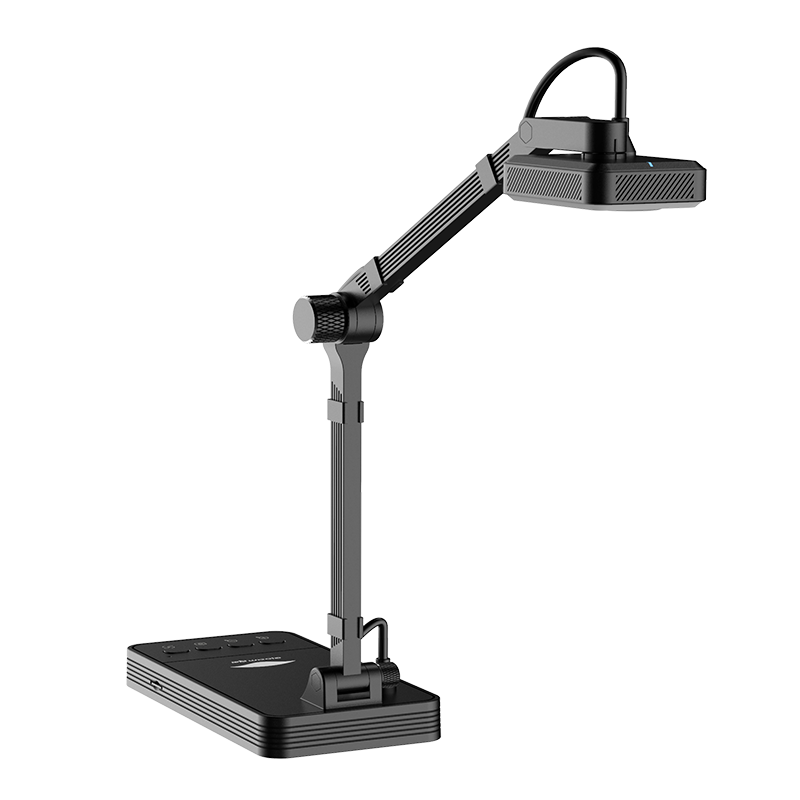 ELOAM YL1050
Wi-Fi / USB A3 Document Presenter
A 10MP A3 visualizer for teachers, distance learning and video calls. The live-camera format also suits album pages, artwork and object capture.
- 10MP
- A3
- Wi-Fi + USB
-
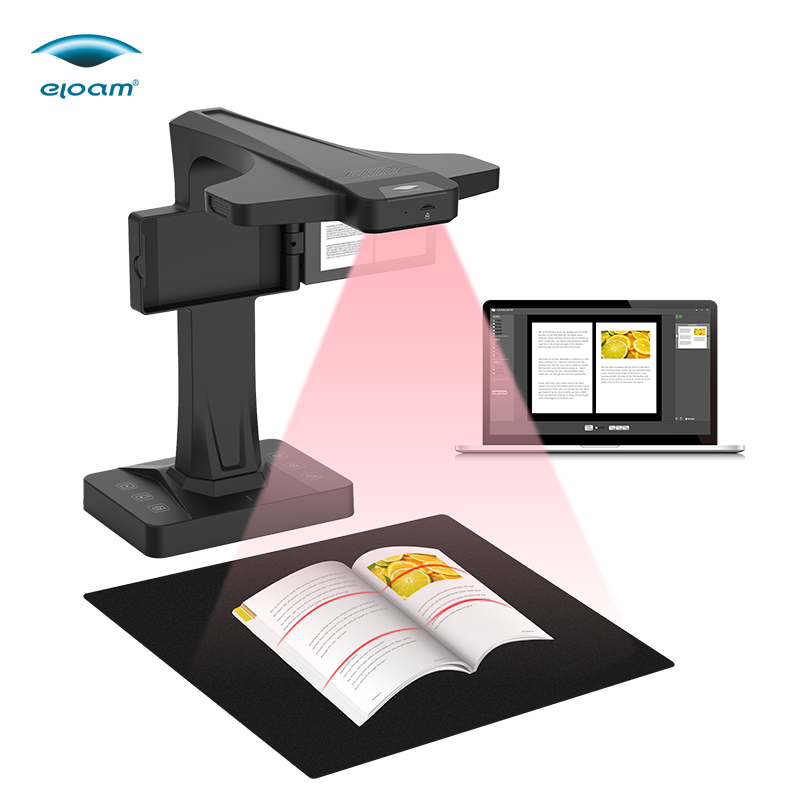 ELOAM 25MP
25MP High-Speed Automatic Scanner with OCR
Built for office and education rollouts where mixed documents must become searchable PDFs quickly over a stable USB connection.
- 25MP
- OCR
- USB
-
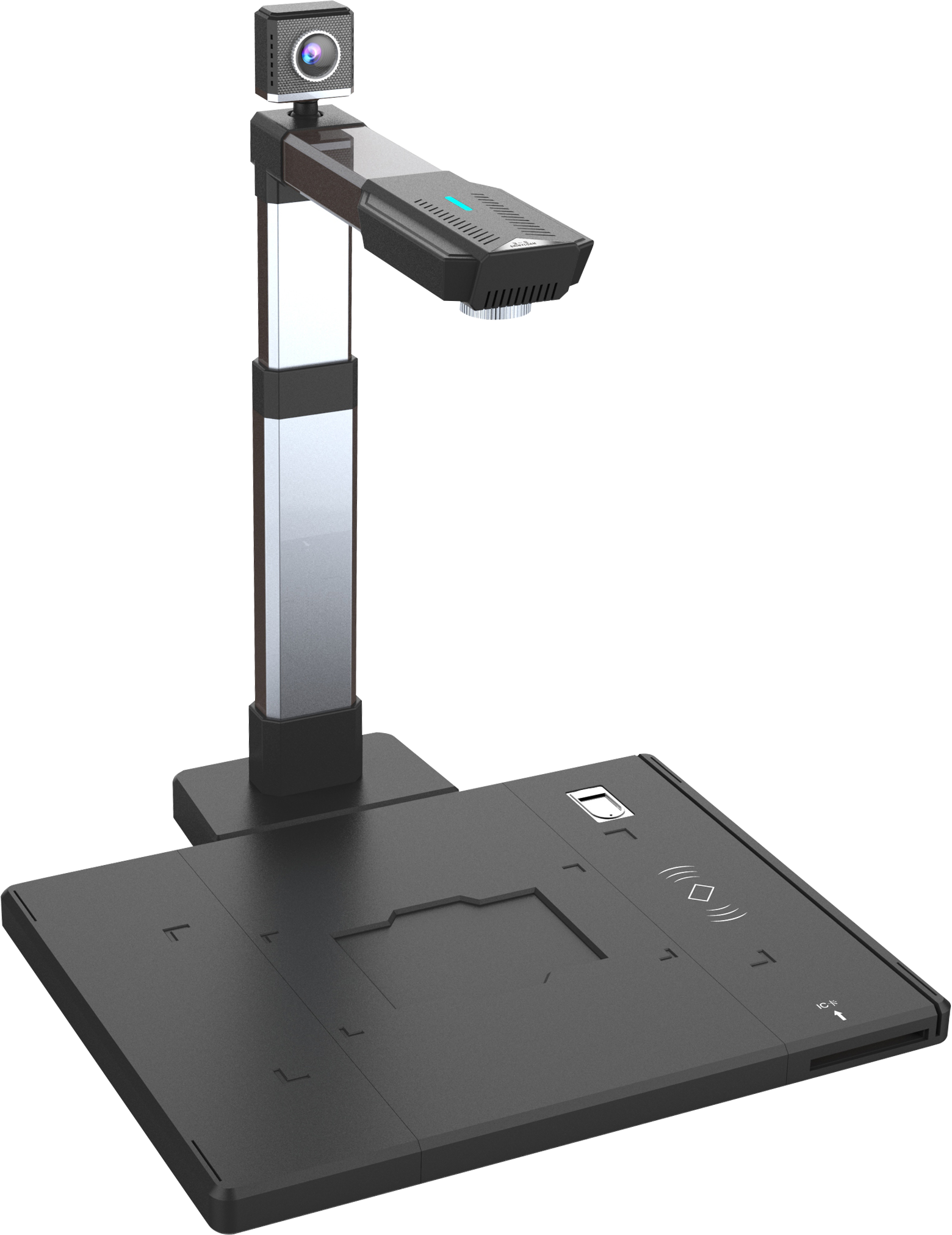 Eloam YL1020
Dual-Lens A3 Scanner with OCR and SDK
A multifunction A3 platform with dual-lens capture, 2D code reading and SDK support for libraries and system integrators.
- Dual lens
- A3
- SDK
-
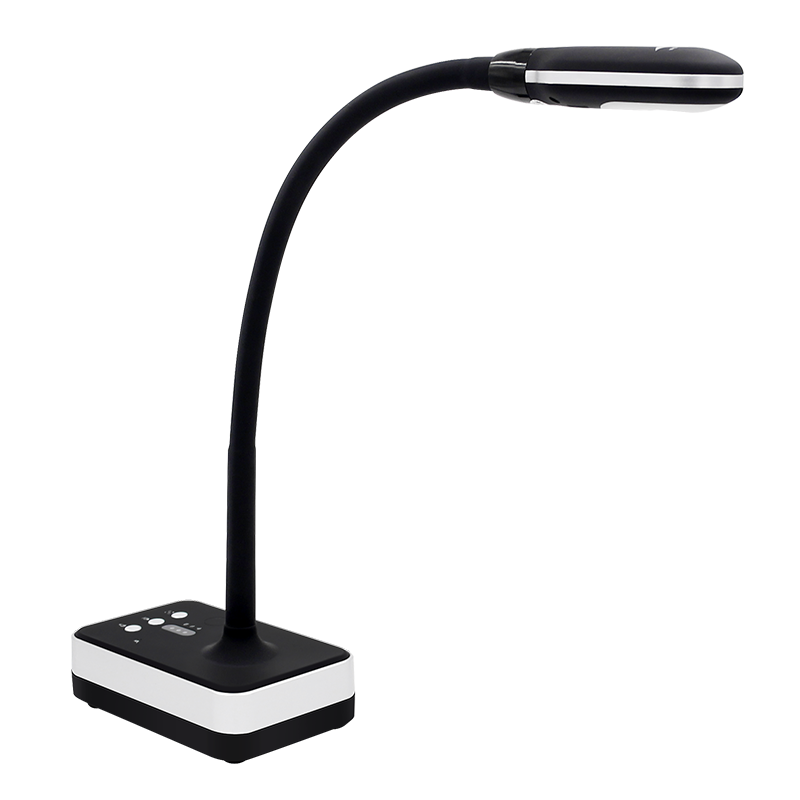 VW1000A3AF
Portable A3 Intelligent Archive Scanner
Auto-focus A3 capture for bound archives, plans and records. A practical USB platform for back-office and counter deployment.
- A3
- Auto-focus
- USB
-
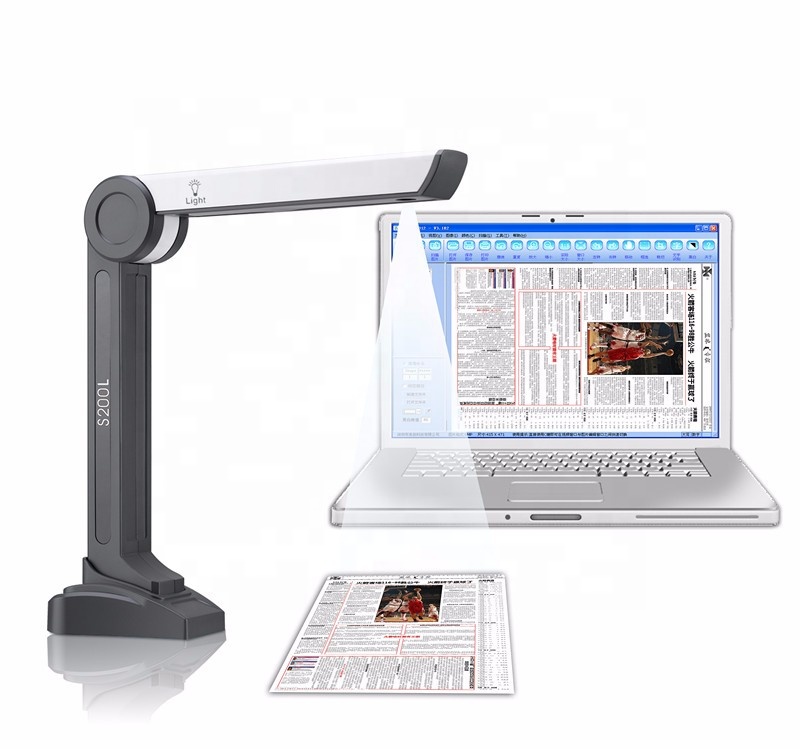 Mini USB 2.0
Portable A4 Visualizer with 1-Second Capture
A low-cost A4 CMOS platform with 1600×1200 output and fast capture for field staff, entry-level classrooms and volume tenders.
- A4
- 1600×1200
- 1s scan
-
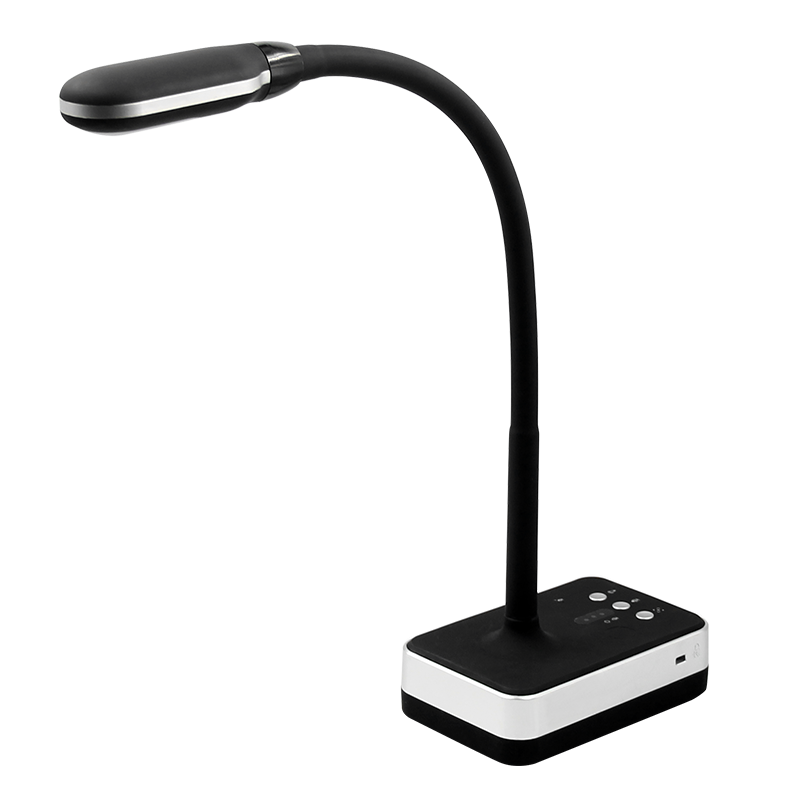 VH1000AF
A4 10MP Wireless Document Camera
A classroom-focused A4 visualizer with wireless and USB modes for hybrid lessons, demonstrations and stable live video.
- 10MP
- A4
- Wireless
-
 S1000C
A4 10MP USB Scanner with Multi-Language OCR
A compact A4 platform with multi-language OCR and Android/Windows support for office scanning, ID capture and counters.
- 10MP
- A4
- OCR
-
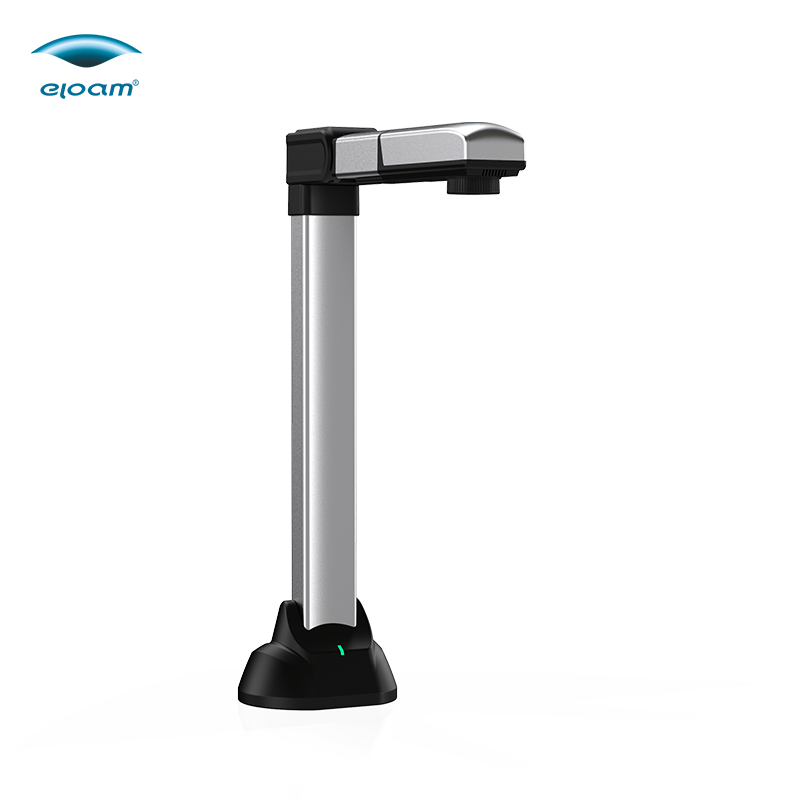 5184×3456
Portable A3 Book and Document Scanner
High-resolution overhead capture for books, albums and oversized originals, with OCR processing and USB connectivity.
- 5184×3456
- A3
- OCR
How Photo Scanner Procurement Is Changing
Buyers are moving away from “one flatbed per desk” toward shared overhead capture, OCR-first workflows and software-integrated devices. These eight shifts are already visible in tender specifications and distributor requests.
Contact-free capture goes mainstream
Albums, stitched books and textured objects cannot be pressed against glass. Overhead scanners keep the original clear of the platen and reduce handling risk.
OCR becomes a line item
Buyers increasingly require bundled OCR, searchable PDF and language coverage. Selected models support up to 180 languages with PDF, JPEG and TIFF output.
One device, several jobs
Schools use the same visualizer for worksheets, science demonstrations and admin documents. Banks use A4 capture for passports, forms and signatures.
Wireless and USB-C expectations
Hybrid work pushed Wi-Fi, 30fps video and single-cable USB-C deployment. Installers want fewer cables; teachers want freedom to move around the room.
SDK-first integration
System integrators evaluate TWAIN/WIA support, SDK commands, 2D code reading and OS compatibility. A documented SDK can be more valuable than another megapixel.
AI cleanup at the edge
Auto-crop, de-skew, background removal, finger masking and text enhancement reduce manual retouching. Test these features with imperfect originals, not brochure samples.
Total cost of ownership
Purchase price is only one line. Hinge life, LED lifetime, spare-part kits, firmware policy and RMA turnaround decide the real cost over five years.
Compliance and sustainability
CE, FCC, RoHS, low standby power, recyclable packaging and consistent labels shorten customs clearance and retail onboarding.
Six Engineering Trends Inside the Factory
Hardware roadmaps are shifting from resolution inflation to image quality, mechanics and software. These are the design decisions that affect the next generation of OEM/ODM photo scanners.
Resolution tiers, not inflation
10MP remains efficient for A4 teaching, 18MP covers A2 documents, and 25–28MP suits archive and photo detail. Beyond that, diminishing returns meet larger file sizes.
Optical zoom returns
Digital zoom enlarges pixels; optical zoom resolves detail. A 13x optical lens keeps fine print and specimens sharp on large displays and projectors.
Light engineering
Flicker-free LEDs, high colour rendering and glare control are now differentiators for glossy photographs, laminated cards and reflective packaging.
Auto-focus and depth
Faster focus hunting and wider depth of field matter when users scan books, objects and mixed document stacks without adjusting the arm.
Book-friendly mechanics
V-shaped cradles, laser-assisted page flattening and preview screens protect spines and reduce post-processing for libraries and archives.
Software-defined features
Capture profiles, naming rules, SDK commands and cloud OCR options turn the scanner into part of a workflow rather than a standalone peripheral.
How to Evaluate an OEM/ODM Photo Scanner Factory
Use a weighted scorecard before placing a sample order. The percentages below reflect the authors’ sourcing view for B2B photo and document scanner programmes; adjust them to your channel.
| Criterion | What to test | Pass signal | Risk if skipped |
|---|---|---|---|
| Image quality | MTF chart, colour checker, 100% crop of 6-point text, glossy photo and fine fabric texture. | Corners stay readable; no obvious colour cast; grain and texture survive processing. | Retail returns, poor OCR input and damaged channel reputation. |
| OCR accuracy | A 20-page mixed-language sample with tables, headers and stamps. | Clean printed pages convert at high accuracy with layout preserved; errors are predictable. | Manual re-keying, hidden labour cost and rejected tenders. |
| Capture speed | 100 cycles at A3 and A4 with mixed document heights and lighting. | Focus and capture stay consistent; no repeated hunting or frozen preview. | Queues at counters and frustrated classroom users. |
| Durability | Arm or hinge cycle test, packaging drop test, cable strain test and LED aging. | No drift, looseness or intermittent connection after the agreed cycle count. | High RMA rates and expensive spare-part logistics. |
| Integration | Compile the SDK sample on the target Windows or Android build; test TWAIN/WIA and 2D code reading. | A developer can capture and export an image within one working day. | Project delays, custom development cost and scope creep. |
| Compliance and traceability | CE/FCC/RoHS documents, label review, serial-number tracking and BOM audit. | Documents match the shipped configuration and serials trace to production lots. | Customs holds, retail delisting and warranty disputes. |
Recommended Platforms by Application
Start with the original, not the model name. Scan area, binding, surface finish and output format will narrow the platform faster than a specification sheet.
| Use case | Recommended platform | Capture area | Why it fits |
|---|---|---|---|
| Hybrid classroom | ELOAM YL1050 / VH1000AF | A3 / A4 | 10MP live video, Wi-Fi and USB options for teaching, demonstrations and video calls. |
| Photo albums and bound books | Portable 5184×3456 A3 book/document scanner | A3 | Non-contact overhead capture with high-resolution output and OCR processing. |
| High-volume office OCR | ELOAM 25MP high-speed scanner | A3 | 25MP capture and OCR over USB for searchable archives and paperless workflows. |
| Library multifunction capture | Eloam YL1020 dual-lens scanner | A3 | Dual-lens capture, 2D code reading and SDK support for integration projects. |
| Bank counter and KYC | ELOAM S1000C | A4 | 10MP capture, multi-language OCR and Android/Windows compatibility in a compact footprint. |
| Field and entry-level rollout | Mini USB 2.0 A4 visualizer | A4 | 1600×1200 output, one-second scan and low cost per seat for large deployments. |
| Archive and large documents | ELOAM VW1000A3AF | A3 | Portable auto-focus capture for plans, records and bound archive material. |
Why Global Buyers Shortlist This Shenzhen Photo Scanner Factory
Shenzhen Hobry Technology Co., Ltd. has manufactured document scanners, book scanners, document cameras and portable monitors since 2005. The company combines in-house R&D with export production for distributors, tender suppliers and system integrators.
20+ years of imaging R&D
Industrial design, optics, firmware and software are developed in-house. That shortens customisation cycles and keeps accountability inside one team.
8 production lines and QC
A 5,000–10,000 m² facility with 101–200 employees supports incoming, in-process and finished-product inspection, plus OEM packaging control.
Verified and certified
The factory has been verified onsite by Intertek. Company credentials include ISO 9001, National High-Tech Enterprise status and software copyright registrations.
OEM/ODM from logo to SDK
Logo printing, housing colour, packaging, buyer-label service, firmware, software UI and SDK customisation are available on selected platforms.
- Intertek onsite verification
- ISO 9001 quality management
- CE certified products
- FCC available on selected models
- National High-Tech Enterprise
- Software copyright registrations
- 1-year standard warranty
Main markets include North America, Southeast Asia, Southern Europe and the Middle East. Accepted payment terms are T/T, L/C, PayPal and Western Union in USD; delivery terms are FOB, CFR, CIF and EXW. Product compliance and final configuration are confirmed per model in the quotation.
Five Steps from Requirement to Shipment
A controlled programme keeps sample promises, mass-production quality and delivery dates aligned. Each step should have a named owner and written acceptance criteria.
Requirement review
Define scan size, resolution, OCR languages, OS, interface, target market compliance and annual quantity.
Design and engineering
Select the platform, then customise housing colour, logo, packaging, firmware defaults, software UI or SDK hooks.
Sample approval
Test pre-production samples against image-quality, OCR, durability and packaging criteria before tooling or volume commitment.
Mass production
Run on 8 production lines with incoming inspection, in-process checks, aging and finished-product sampling.
Delivery and support
Ship under FOB, CFR, CIF or EXW terms with spare-part planning, firmware records and after-sales technical support.
Where These Photo and Document Scanners Are Deployed
Capture requirements differ by sector. A classroom values live video and mobility; a library values spine protection; a bank values speed and identity accuracy.
Education
Visualizers for live demonstrations, wireless cameras for hybrid lessons and A3 capture for worksheets, maps and science objects.
Banking and government
Fast passport, ID and form capture at counters, with OCR to reduce manual keying and SDK options for core-system integration.
Libraries and archives
Non-destructive book scanning with V-shaped cradles and laser curve correction for fragile, bound and oversized collections.
Office and remote work
Paperless workflows with searchable PDFs, plus portable monitors and visualizers for mobile professionals and shared desks.
Questions Buyers Ask Before an OEM/ODM Order
Clear answers shorten supplier qualification. If a requirement is model-specific, ask for written confirmation and include it in the sample approval record.
Are you a manufacturer or a trading company?
Do you offer OEM and ODM for photo scanners and document cameras?
Can your scanners capture photographs and bound albums without damage?
What is the MOQ and can I order a sample first?
Which OCR languages and operating systems are supported?
What certifications and warranty do you provide?
Which payment and delivery terms are accepted?
How do you protect image quality during mass production?
Build Your Photo Scanner Programme with a Verified Factory
Send your scan area, target resolution, OCR languages, operating system, estimated annual quantity and packaging requirements. The OEM/ODM team will recommend a platform, confirm model-specific features and prepare a quotation.
info@hobrytech.com · Shenzhen, Guangdong, China