8 Non Contact Scanner Models for OEM/ODM Programs
These are not catalog placeholders. Each platform below is a starting point for private label, appearance customization, SDK integration and volume production. Preserve the product URL, compare capture area and interface, then request a sample for validation.
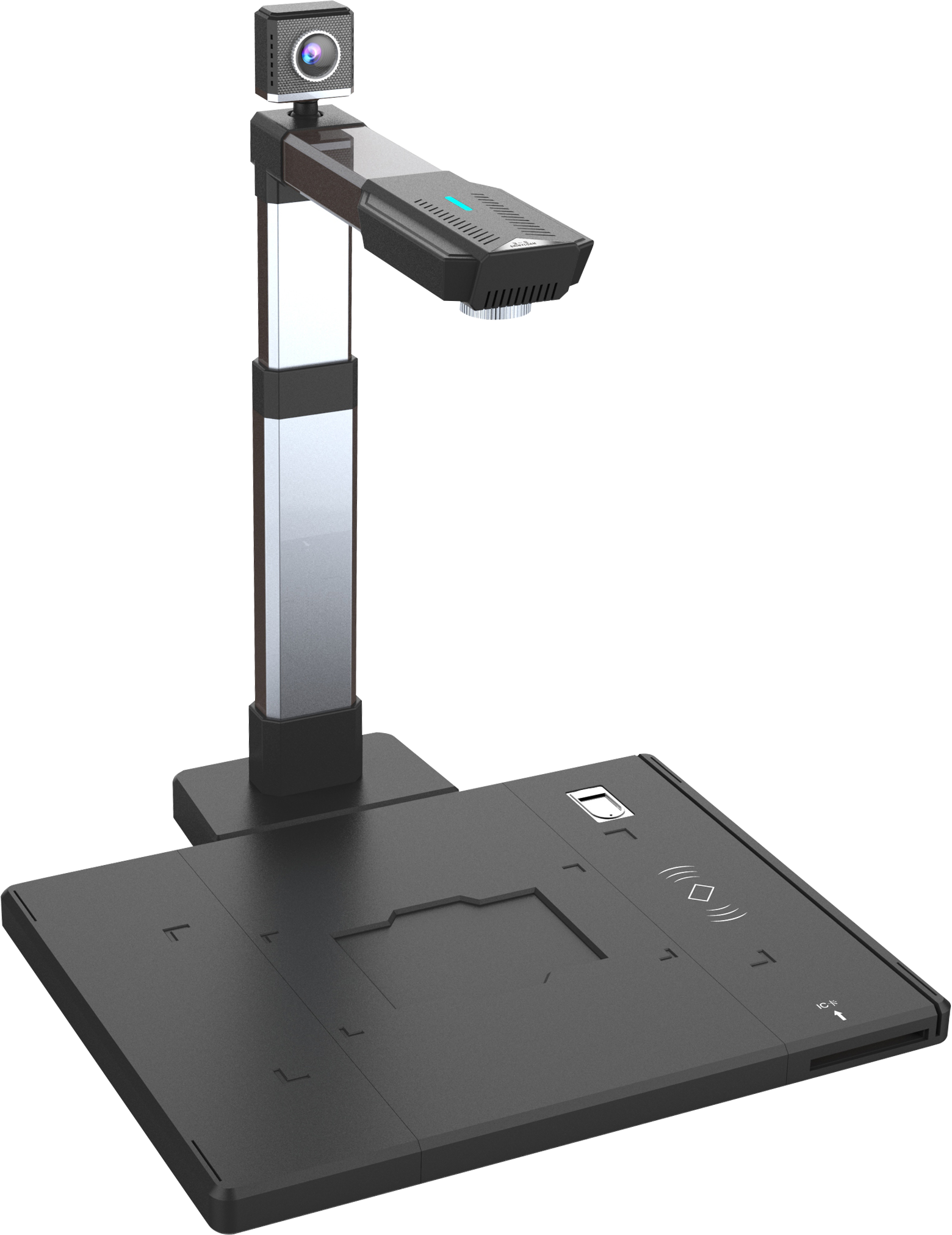
Eloam YL1020 Dual-Lens USB A3 OCR 2D Code SDK Document Scanner
- A3
- Dual lens
- USB
- OCR
- 2D code
- SDK

Eloam 10MP A3 Professional OCR Document Scanner
- 10MP
- A3
- 1-second
- Continuous mode
- USB
- OCR
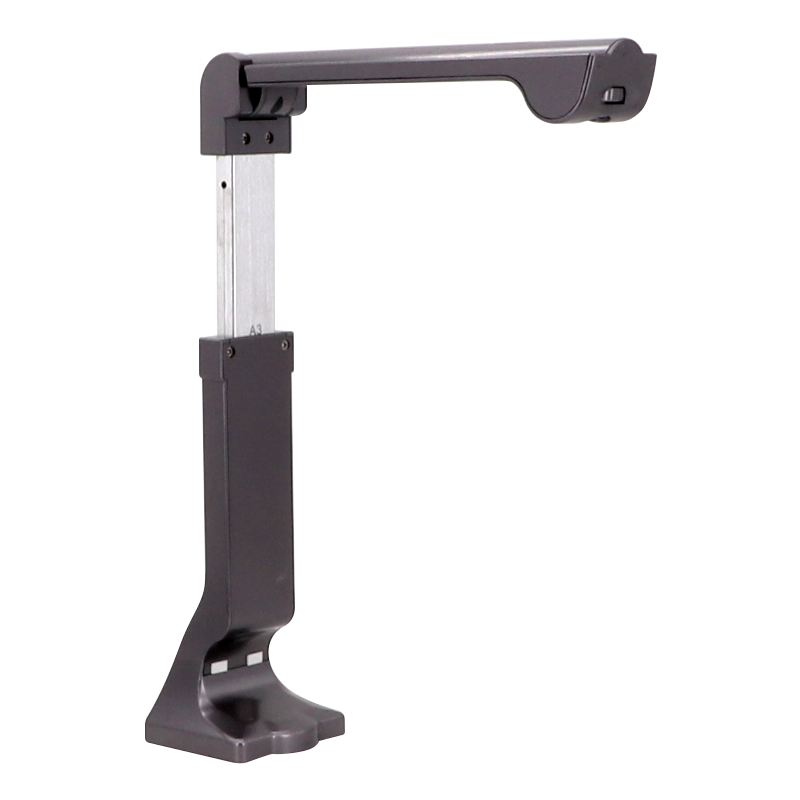
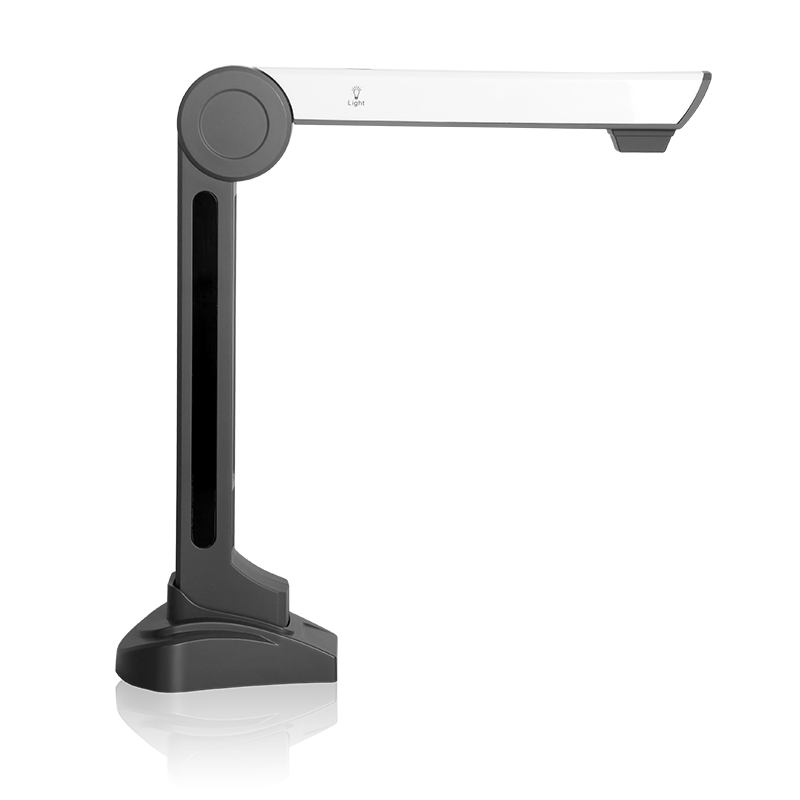
Eloam S500P 5MP Ultra Portable High-Speed OCR Document Scanner
- 5MP
- Portable
- USB
- OCR
- SDK
- School
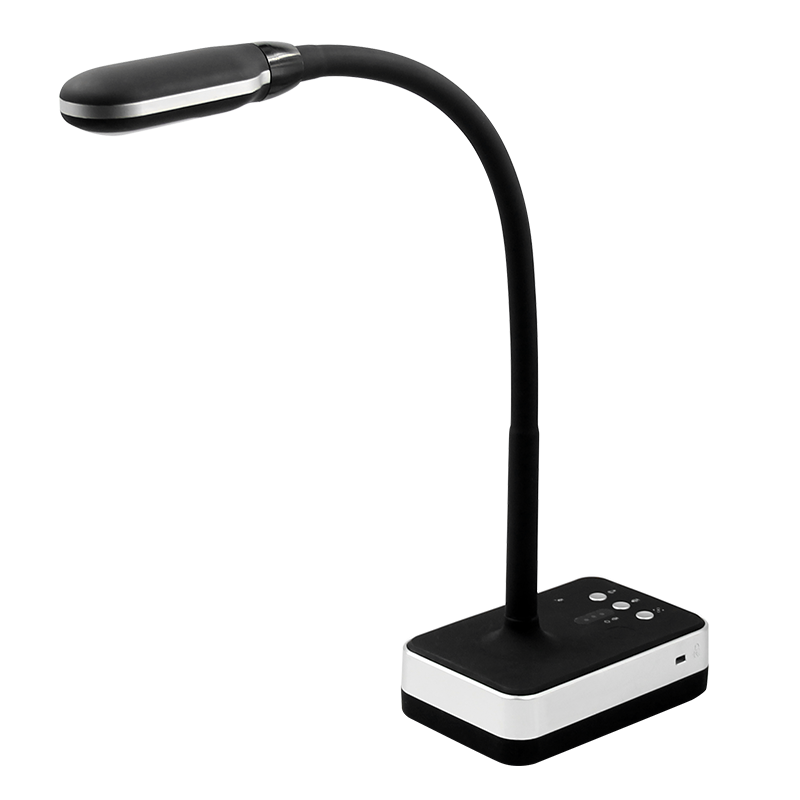
ELOAM VH802A3AF USB Document Camera OCR Scanner
- 8MP
- A3
- USB
- OCR
- Document camera
- High-speed
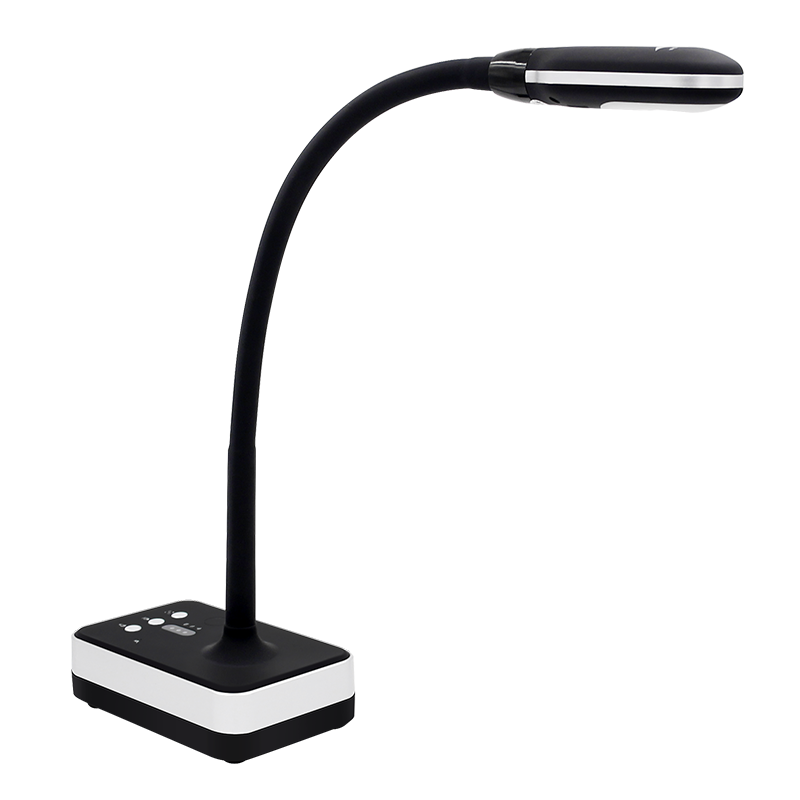
ELOAM VW1000A3AF High Speed Portable A3 Intelligent Archive Scanner
- A3
- Auto focus
- USB
- Intelligent archive
- Portable
- High-speed
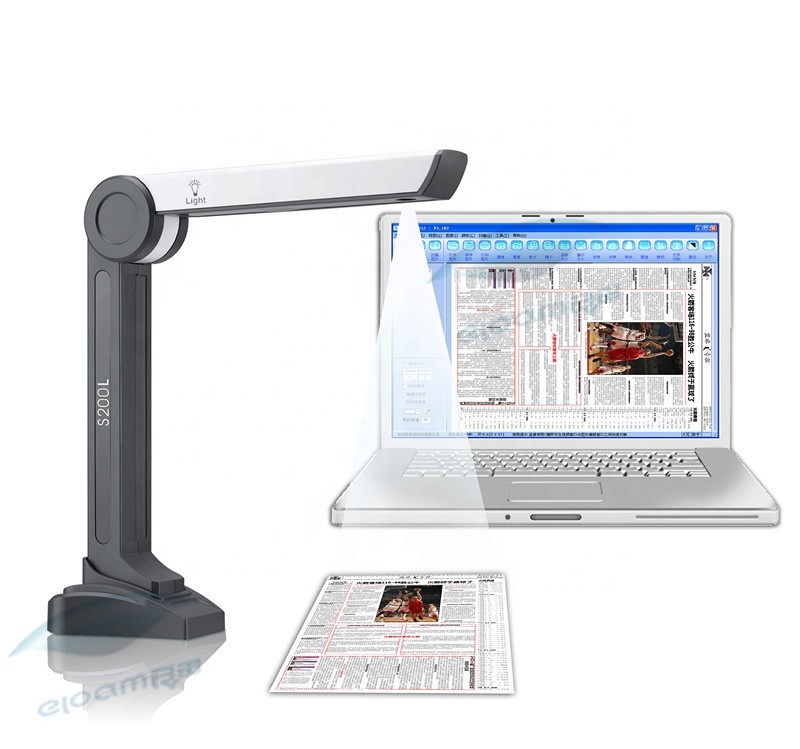
Eloam USB A4 Document Scanner with 1 Second Scan Speed
- A4
- 1600×1200
- CMOS
- 1-second
- ABBYY OCR
- USB
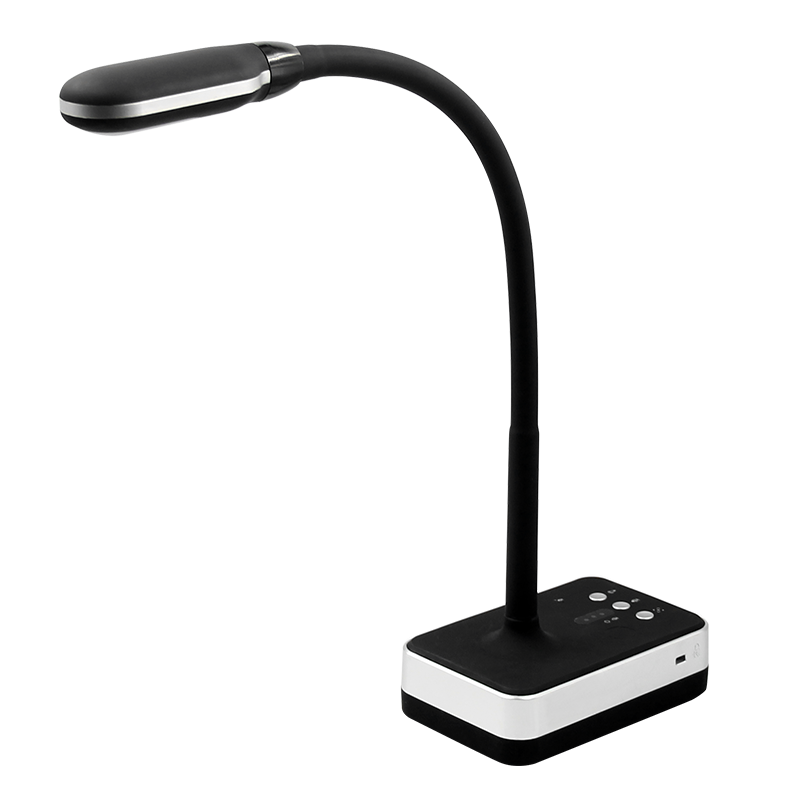
ELOAM VH1000AF A4 10MP Wireless Portable Document Camera
- A4
- 10MP
- Wireless
- USB
- Education
- Portable
Need a configuration that is not listed? We can adapt housing, firmware, SDK, packaging and buyer-label artwork around your tender requirements.
Inquire NowWhat OEM/ODM Non Contact Scanning Really Means
Non-contact scanning uses a CMOS camera and a fixed or flexible arm to capture a document without pulling it through rollers or pressing it against a glass platen. That architecture is why non-contact scanners are preferred for bound books, passports, ID cards, folded drawings, fragile archival paper, and even physical objects that a flatbed cannot close over. In a B2B tender, the same hardware may be called an overhead scanner, a document camera, a visualizer, or a book scanner; the buying logic is still the same: capture area, resolution, lighting, OCR, SDK and serviceability.
OEM usually means the buyer brings a specification or a market-ready product definition and the factory manufactures it under the buyer’s brand. ODM goes further: the factory contributes the optical platform, housing design, firmware and software, then customizes it for the buyer’s channel. A trading company can relabel a box; a factory can change optics, firmware, SDK commands, housing tooling, packaging and certification documentation. That difference matters when your tender requires 180-language OCR, UVC output, a documented SDK or a multi-year service plan.
This page is structured to add decision-grade information gain rather than keyword repetition. It combines model-level recommendations, procurement shifts, product-development signals, verifiable factory evidence and practical FAQ answers from a Shenzhen manufacturer that has served education, banking, government, library and office channels since 2005. Shenzhen Hobry Technology Co., Ltd. operates 8 production lines in a 5,000–10,000 m² facility, holds ISO 9001 and National High-Tech Enterprise credentials, and has been verified onsite by Intertek.
- Model-level fit for KYC, archives, libraries, classrooms and field teams
- Procurement trends that affect tender scoring and total cost of ownership
- Product-development signals for 2026–2030, including optical zoom and SDK modules
- Verifiable factory, certification, trade-term and warranty information
Choose a Non Contact Scanner by Application, Not by Megapixels Alone
The right scanner is the one that survives daily use in its actual environment. Use this application matrix before requesting samples.
S520 A4 USB Platform
A compact counter scanner for ID cards, passports and account-opening forms. Validate 5MP capture, 180-language OCR and USB deployment with your own KYC software. The small footprint matters when every teller position needs a device and cable management is tight.
YL1020 / S600 A3 Workhorses
For contracts, invoices, folded drawings and archive batches, A3 is the practical minimum. The YL1020 dual-lens platform adds SDK flexibility and 2D-code capture; the S600 folding design saves counter space. Test auto-crop and OCR on your own mixed paper stock.
VW1000A3AF Intelligent Archive
A portable A3 auto-focus platform for digital mailrooms and service centers. Pair intelligent archiving with barcode or QR rules, then measure cycle time including preview, crop and OCR. Confirm USB driver policy and SDK availability before a multi-site rollout.
BS3000PRO Book Scanner Series
For bound volumes and fragile records, the V-shaped cradle and laser-assisted flattening protect spines while correcting page curvature. 28MP resolution, preview screen and OCR make it a specialist archive tool rather than a commodity A4 webcam. Request a book-safe handling demonstration.
VH1000AF / YL1050AF Visualizers
Teachers need live 30 FPS video, simple focus and reliable UVC or wireless connection to Zoom, Teams and interactive flat panels. A4 10MP models suit individual classrooms; A3 wireless models support science demonstrations and shared teaching rooms. Test Wi-Fi stability before a district rollout.
S500P / VH802A3AF Portable Capture
Field auditors, insurance agents and mobile claims teams need a scanner that fits a laptop bag. The S500P 5MP and VH802A3AF 8MP A3 models prioritize USB power, compact folding and quick setup. Check cable strain relief and low-power laptop performance during the sample stage.
Non Contact Scanner Procurement Trends for 2026–2030
Public tenders and private-label projects are moving away from “cheapest scanner” toward total deployment cost, integration risk and traceability. These six shifts are already visible in buyer requirements.
SDK-First Procurement
Buyers now ask for an SDK before a sample: document edge detection, auto-crop, OCR trigger, image rotation, PDF assembly and device status. A scanner without a documented SDK becomes a dead end for system integrators. Ask for SDK scope, sample code, operating-system support and version policy.
Total Cost of Ownership
A low-cost device that fails at 40,000 scans costs more than a serviceable unit. Evaluate lamp life, moving parts, cable design, firmware update policy, spare-parts availability and warranty turnaround. Procurement teams increasingly score downtime and service response, not only unit price.
Compliance & Traceability
CE, FCC, ISO 9001 and an Intertek report matter more when the buyer is a school district or a government agency. Keep declarations, test reports and software copyrights ready for tender submission. Traceability from component batch to finished serial number shortens qualification.
Low-MOQ Private Label
Distributors want their own logo, packaging, housing color, UI and firmware. A factory that supports sample-first validation and then scales reduces inventory risk. Confirm whether the MOQ includes tooling, certification and packaging setup, and whether buyer-label service covers manuals and warranty cards.
Hybrid Work & Hybrid Classrooms
Visualizers must work with Zoom, Teams, Google Meet and classroom display software. UVC plug-and-play, wireless presentation and 30 FPS live video are becoming baseline requirements, not upgrades. Buyers also test microphone and speaker integration for lecture capture.
Supply-Chain Resilience
Buyers are splitting orders across regions and asking for factory verification, production-line evidence and raw-material substitution plans. An onsite-verified Shenzhen factory with 8 lines gives procurement teams a clearer audit trail than an anonymous trading office, especially during certification renewals.
Where Non Contact Scanning Is Going Next
Camera-based scanning is evolving from “document capture” to “edge data capture”. The hardware roadmap below reflects what OEM/ODM buyers are asking us to build.
Optical Zoom & Larger Sensors
13MP is becoming mainstream for A3, while 18–28MP sensors serve A2 and book scanning. Optical zoom preserves detail on large displays where digital zoom cannot. Expect more 4K/30 FPS video and better low-light performance, especially for lecture halls and archive labs.
On-Device OCR & AI Assistance
OCR is moving closer to the device, with up to 180 languages supported on selected models. On-device pre-processing for deskew, hole-punch removal, background cleanup and blank-page filtering reduces total workflow time and lowers dependency on PC performance.
Wireless, USB-C & UVC
USB-C and wireless connectivity are replacing proprietary interfaces. UVC plug-and-play simplifies integration with Windows, macOS, Android and interactive flat panels. Barcode and 2D-code capture is being pushed to the device layer so integrators can reduce PC-side processing.
Modular Firmware & SDK
OEMs no longer want a single fixed firmware image. They want a stable core plus configurable modules for SDK commands, branding, OSD and OCR. That allows one hardware platform to serve banking, education and archival channels without rebuilding the optics or housing tooling.
Sustainable & Serviceable Design
Low-carbon office concepts, recycled packaging, lower standby power and replaceable cable assemblies are part of procurement scoring. Design for serviceability reduces e-waste and improves warranty economics, which matters for multi-year government and education contracts.
Multi-Camera, 3D & Special Capture
Dual-lens models such as YL1020 can combine document and scene capture. Future platforms will address ID-card UV/IR, material texture, 3D objects and multi-view book curvature correction. For OEM buyers, this creates opportunities in insurance, customs, healthcare and heritage preservation.

Inside the Shenzhen Manufacturing Base
Hobry has manufactured document scanners, book scanners, document cameras and portable monitors since 2005. The factory has been verified onsite by Intertek, and the company holds ISO 9001 quality management certification, a National High-Tech Enterprise certificate and software copyright registrations.
- 8 production lines in a 5,000–10,000 m² facility
- In-house industrial design, optics, firmware and software R&D
- OEM, ODM, buyer-label, logo, packaging and firmware customization
- CE certification, FCC on selected models and standard 1-year warranty
Why Hobry Is a Factory, Not a Trading Company
Shenzhen Hobry Technology Co., Ltd. has manufactured imaging hardware since 2005. These advantages are verifiable and directly relevant to OEM/ODM procurement.
20+ Years of Imaging R&D
Founded in 2005, with in-house industrial design, optics, firmware and software teams. National High-Tech Enterprise status, software copyrights and patents support buyer-label programs and tender submissions.
Manufacturing Scale
8 production lines in a 5,000–10,000 m² facility, 101–200 employees and an integrated export team. That matters when your program moves from single-unit samples to quarterly volume and requires consistent QC documentation.
Genuine OEM/ODM Flexibility
Logo, packaging, housing color, firmware, software UI and SDK integration. Buyer-label and design services are available, and selected models offer an SDK for system integration. Customization is not limited to a sticker on a carton.
Quality & Certification Evidence
ISO 9001 quality management, CE certification, FCC on selected models, Intertek onsite factory verification and a standard 1-year warranty. The assessment covers premises, production capability, quality control and legal status.
Export Terms That Fit Projects
USD quotations with T/T, L/C, PayPal or Western Union. Delivery terms include FOB, CFR, CIF and EXW. Main markets include North America, Southeast Asia, Southern Europe and the Middle East, with worldwide shipping support.
Application Engineering Support
We support workflows for education, banking and government, libraries and archives, offices and remote work. Our team can review scan size, resolution, OS, interface and target-market compliance before a sample is built, reducing back-and-forth during sourcing.
From Requirement to Shipment: Six Clear Steps
With in-house optics, firmware and software teams, we customize hardware and software instead of simply relabeling a generic product.
Requirement Review
Scan size, resolution, operating system, interface, OCR language, certification market and target quantity are confirmed before quoting.
Design & Engineering
Housing color, logo, packaging, firmware parameters, software UI and SDK scope are defined with your acceptance criteria.
Sample Approval
Pre-production samples are tested against your documents, lighting conditions, OCR rules and integration environment.
Mass Production
8 production lines with incoming, in-process and finished-product quality control keep output consistent across repeat orders.
Certification & Packaging
CE/FCC documentation, buyer-label artwork, retail or bulk packaging and warranty-card preparation are coordinated before shipment.
Delivery & Support
FOB, CFR, CIF or EXW shipment terms, standard 1-year warranty, spare-parts planning and technical support for your service team.
OEM/ODM Non Contact Scanner Questions Buyers Ask
Is Hobry a manufacturer or a trading company?
Do you offer OEM and ODM for non contact scanners and document cameras?
Which OCR languages, output formats and operating systems are supported?
Can I order samples before a bulk order, and what payment and delivery terms do you accept?
Which certifications and warranty do you provide?
How do I choose between A4, A3 and A2 non contact scanners for my project?
Request an OEM/ODM Quotation for Your Non Contact Scanner Project
Share scan size, target quantity, OCR languages, interface, operating system, certification market and packaging requirements. Our engineers will recommend a model, outline a sample plan and prepare a factory quotation.